Last updated October 30, 2026
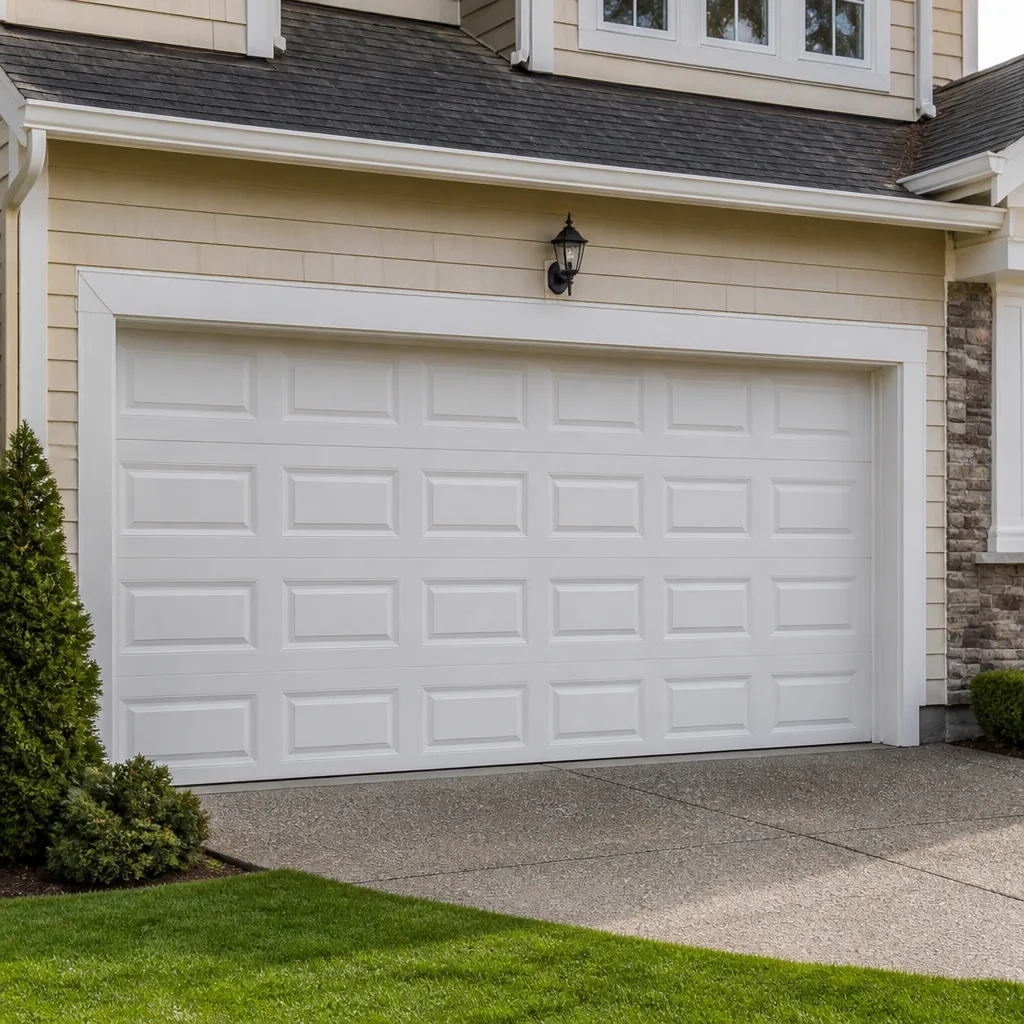 Raised-panel steel
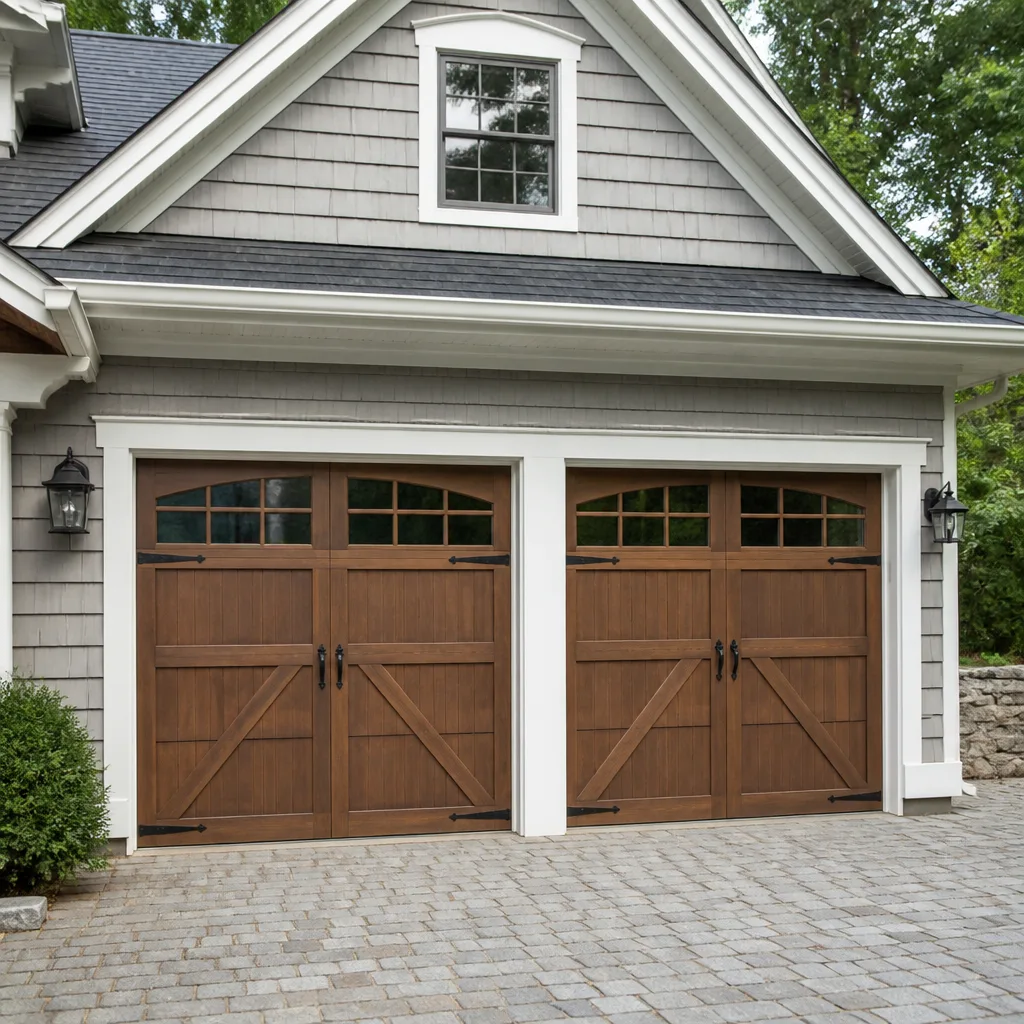 Carriage house
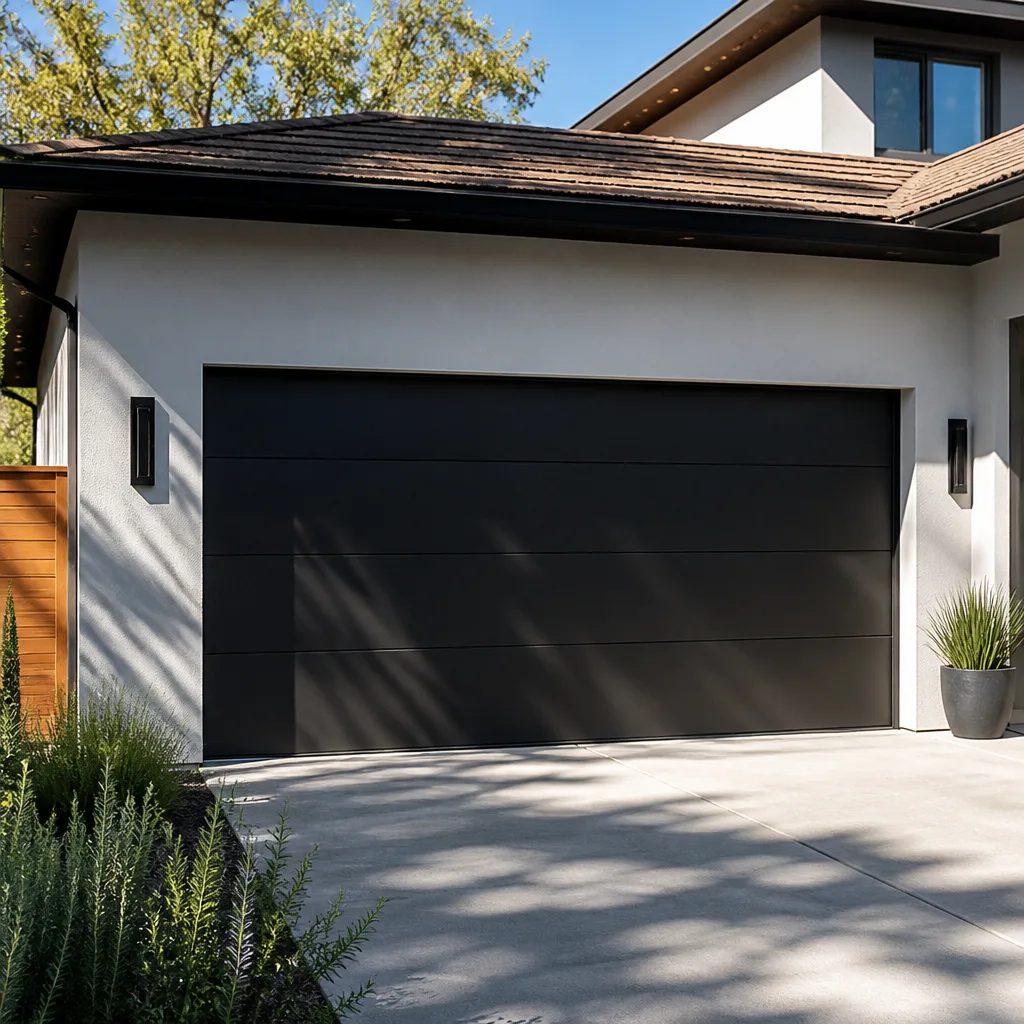 Modern flush
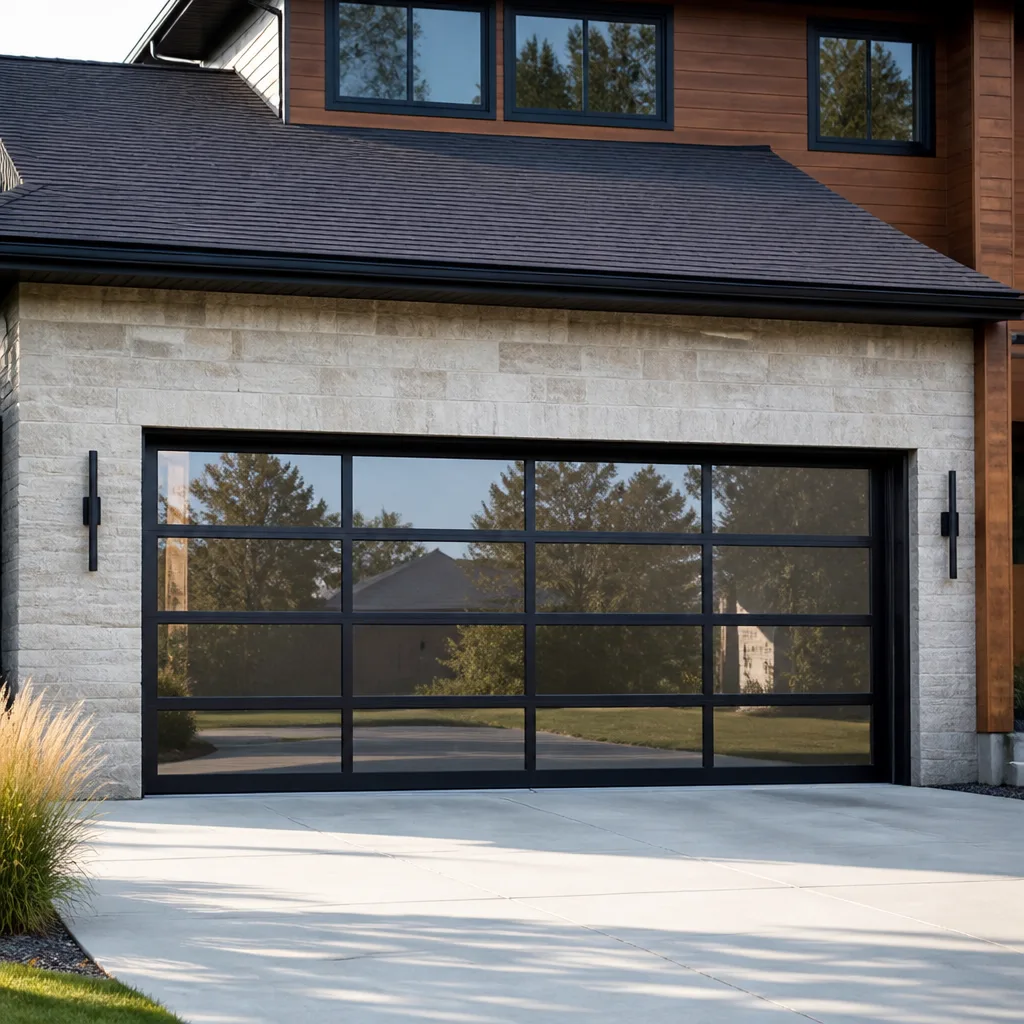 Full-view glass
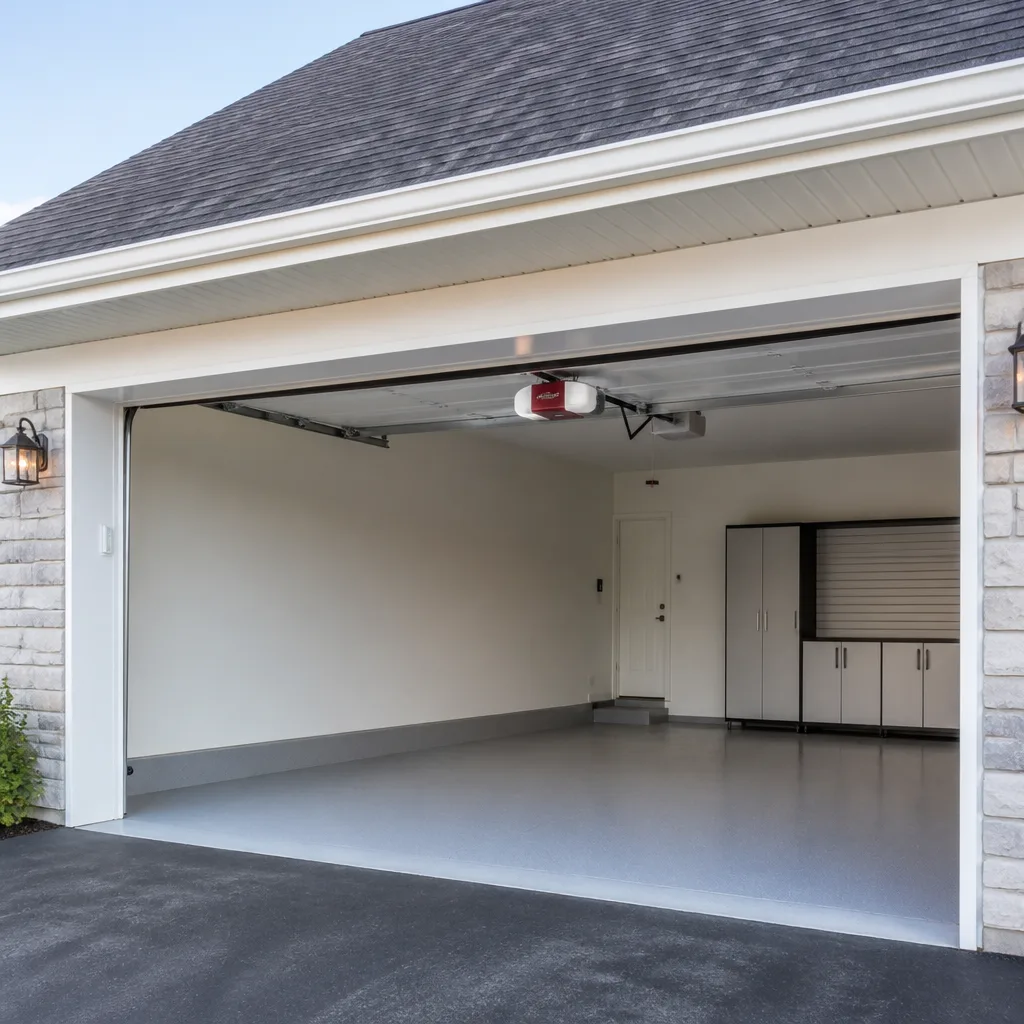 LiftMaster openers
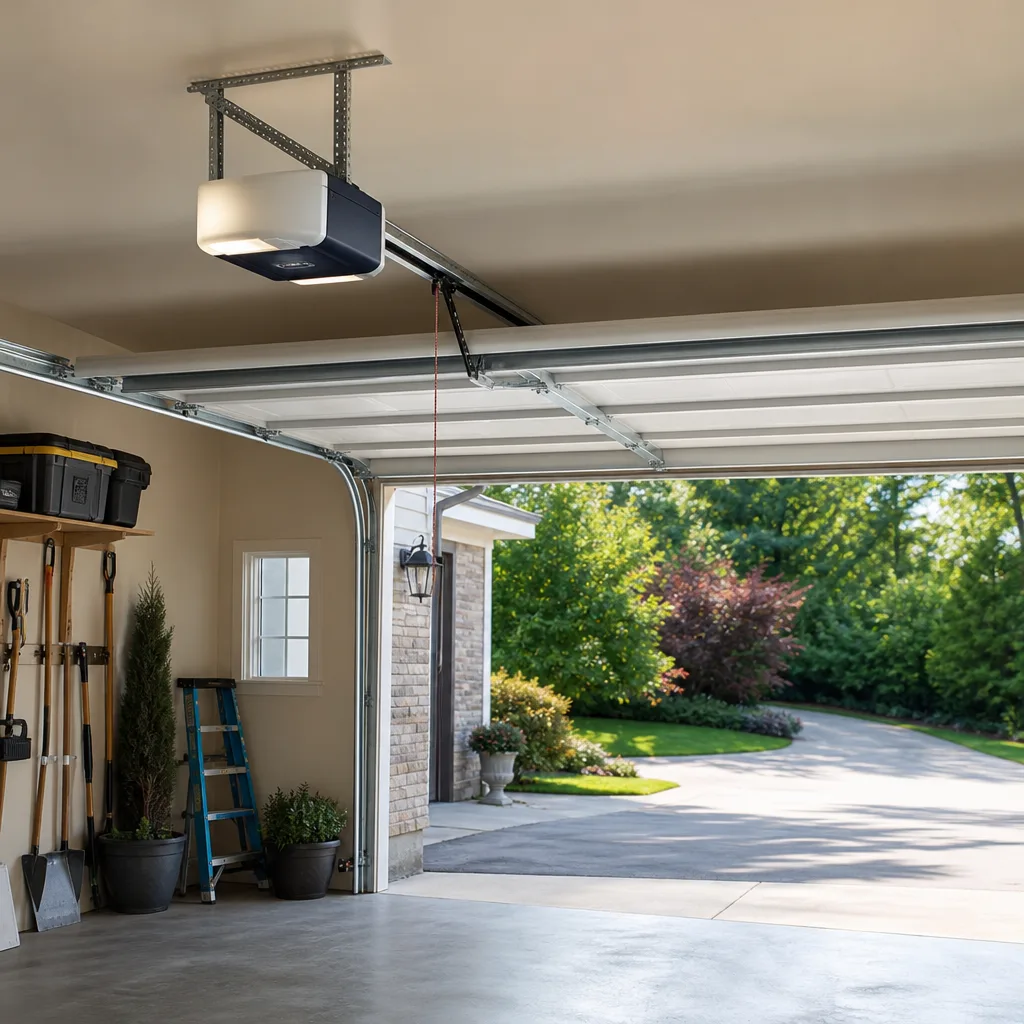 Chamberlain openers
Full 25-point door and opener safety check with every visit - springs, cables, rollers, tracks, and your LiftMaster or Chamberlain opener included
You get a price before we start. It does not change when the truck arrives.
Get your free estimateThe Complete Guide to Garage Door in Orlando
Most garage door failures in Central Florida aren’t caused by age. They’re caused by hardware chosen for a climate that doesn’t exist here. A torsion spring rated for Ohio winters corrodes twice as fast under Orlando’s humidity. A track assembly designed for dry air binds when salt and moisture settle into the rollers. This guide walks through how Orlando’s specific environment shapes every decision about your garage door: what fails, what holds up, how much things cost, and when to repair versus replace. You’ll learn how to read Florida wind-load labels, which opener features actually matter in a storm-prone suburb, and why HOA rules in Orange County change what you can install.
Quick Answer
A garage door in Orlando needs to be evaluated as a climate-specific system, not a standard product. The most common failures we see are humidity-driven spring corrosion, opener motor strain from daily thermal cycling, and track misalignment from shifting concrete slabs. Expect to pay $150 to $450 for typical repairs like spring replacement, $200 to $650 for opener repair, and $1,200 to $3,800 for a full residential door replacement, depending on material and wind-load rating. For a deeper look at pricing, see our Garage Door Cost Breakdown: The Orlando Homeowner’s Reference for 2026. The single most important upgrade for any Orlando garage door is galvanized or stainless hardware paired with a humidity-rated opener with battery backup.
Styles & brands we work with
Table of Contents
- How Orlando’s Climate Attacks Your Garage Door
- Galvanized vs. Stainless Hardware: What Actually Lasts in Orlando
- Understanding Florida Wind-Load Ratings for Garage Doors
- Garage Door Openers in Orlando: Features That Matter
- HOA Compliance in Orange and Seminole County
- What Garage Door Repair and Replacement Costs in Orlando
- A Seasonal Maintenance Schedule for Central Florida Homes
How Orlando’s Climate Attacks Your Garage Door
Orlando averages 50 to 55 inches of rain per year, with humidity sitting above 70 percent for most months. That’s not just a comfort problem. It’s a mechanical one. Your garage door is a system of steel, aluminum, and electronics exposed to air that carries moisture, salt from coastal weather patterns, and the residue of daily temperature swings that create condensation inside the door panels themselves.
Here’s what actually happens, in order of how often we see it in this market:
- Spring corrosion. Standard torsion springs are made from oil-tempered steel. That steel rusts when humidity stays high. Rust creates microscopic pitting on the spring surface, which concentrates stress and leads to premature fracture. A spring rated for 10,000 cycles may fail at 5,000 or 6,000 in Orlando if it’s a low-grade oil-tempered unit.
- Roller degradation. Nylon rollers handle humidity better than steel, but the bearing inside still corrodes if it’s not sealed. Seized bearings force the door to drag, which overloads the opener motor.
- Track misalignment from slab movement. Central Florida sits on sandy soil with a high water table. Concrete slabs shift more here than in northern markets. When the slab under the door tracks shifts even a quarter inch, tracks bind and the door starts struggling.
- Opener motor strain. Motors run hot already. In an unconditioned Orlando garage where ambient temps hit 95 degrees in August, the motor’s thermal overload protection triggers more often, shortening its life.
In neighborhoods like Conway, College Park, and Baldwin Park, we see the same pattern: doors installed with contractor-grade hardware fail 30 to 40 percent sooner than the same door would in a dry climate. The fix isn’t more lubrication. It’s choosing the right materials from the start, which the next section covers.
Galvanized vs. Stainless Hardware: What Actually Lasts in Orlando
The distinction sounds technical, but it’s the single biggest determinant of how long a Orlando garage door lasts. Standard hardware, the stuff that comes pre-bagged with most residential doors, is zinc-plated steel. Zinc plating is fine in dry climates. In Orlando, where humidity stays high year-round and coastal salt air drifts inland, zinc plating corrodes within four to six years.
Galvanized hardware uses a thicker zinc coating, usually applied through hot-dip galvanization. That coating holds up significantly better. Stainless steel hardware, typically 304 or 316 grade, resists corrosion almost indefinitely in residential use. The catch: stainless costs 40 to 60 percent more than zinc-plated equivalent parts.
Here’s a practical breakdown for Orlando homeowners:
- Zinc-plated springs and brackets: Budget option. Expect visible rust within three to five years. We generally recommend against this in Orlando unless the homeowner plans to sell within that window.
- Galvanized springs and brackets: Mid-range option. Corrosion resistance lasts seven to ten years in Central Florida’s humidity. This is the practical sweet spot for most homes.
- Stainless steel springs, brackets, and fasteners: Premium option. Fifteen-plus years of corrosion resistance. Makes sense if you’re installing a high-end door from Clopay or Amarr and want everything to hold up together.
One thing to know: most door manufacturers don’t ship stainless hardware by default. You have to ask for it. When we install a new door in Orlando, we recommend galvanized hardware at minimum, and stainless for any coastal-adjacent areas or homes within a few miles of the St. Johns River where moisture is even more persistent.
Understanding Florida Wind-Load Ratings for Garage Doors
Since 2002, the Florida Building Code has required garage doors to meet specific wind-load standards. This isn’t optional. If your home was built or substantially renovated after 2002, your garage door must carry a wind-load rating label. If you’re replacing a door, the new one has to meet or exceed the rating required for your specific wind zone in Orange or Seminole County.
The label is typically a metal plate or sticker on the inside of the door panel, near the bottom section. It lists the design pressure rating in pounds per square foot (PSF) and may include a product approval number from the Florida Department of Business and Professional Regulation.
Here’s how to read it:
- Find the PSF rating. Most residential doors in Orlando are rated between -45 and -60 PSF. The negative number indicates suction pressure, which is the primary force hurricanes exert on garage doors.
- Confirm the approval number. A legitimate Florida-approved door has an FL product approval number printed on the label. If there’s no number, the door is likely pre-2002 or not code-compliant.
- Match the rating to your zone. Homes closer to the coast or in higher-exposure zones need higher ratings. A door rated for -45 PSF may not pass inspection in a -60 PSF zone.
- Don’t retrofit without upgrading. Adding bracing or struts to an unrated door doesn’t create code compliance. If the door doesn’t have a rating, it needs to be replaced.
Brands like Amarr and Clopay manufacture wind-rated doors specifically for the Florida market. These doors use reinforced sections, heavier gauge steel, and integrated struts. They cost more, but insurance carriers in Orange County often provide premium discounts for compliant doors, which offsets the difference over time.
Garage Door Openers in Orlando: Features That Matter
Most national opener buying guides recommend horsepower, noise level, and smart features. Those matter everywhere. But in Orlando, two features matter more: battery backup and humidity-rated motor construction.
Battery backup is no longer optional in Florida. The 2023 Florida Building Code, which took effect December 31, 2023, requires all newly installed residential garage door openers to have battery backup. That’s not a recommendation. It’s code. During hurricane season, when power outages are routine, a garage door without battery backup strands you either inside or outside your home. LiftMaster and Genie both manufacture code-compliant battery-backup openers.
Humidity-rated motor construction is less discussed but equally important. Opener motors produce heat. When that heat mixes with Orlando’s ambient humidity, condensation forms inside the motor housing. Openers with sealed motor housings or conformal-coated circuit boards handle this better. Chamberlain’s newer belt-drive units include conformal-coated boards as standard.
Other features worth considering for this market specifically:
- DC motors over AC: DC motors run cooler and handle frequent cycling better. In Orlando, where people cycle their doors multiple times daily, DC motors last longer.
- Belt drive over chain drive: Belt drives don’t require lubrication and don’t rust. Chain drives can corrode in sustained humidity unless regularly maintained.
- Smart connectivity with climate monitoring: Some Genie and Chamberlain units include garage temperature sensors. Useful in a climate where garage heat affects stored items and can indicate ventilation problems.
If your opener predates 2023 and lacks battery backup, you’re not code-noncompliant. The requirement applies to new installations. But if the opener is aging, replacement with a code-compliant unit gives you current compliance and better storm readiness.
HOA Compliance in Orange and Seminole County
Orlando is one of the most HOA-dense markets in the country. Communities like Avalon Park, Baldwin Park, Hunter’s Creek, and Waterford Lakes all have architectural review committees with specific rules about garage door appearance. Seminole County subdivisions like Heathrow and Lake Mary run similarly strict programs.
Most Orlando HOA garage door rules cover:
- Color and finish: Many HOAs require doors to match specific trim palettes. White, almond, and wood-tone are common. Some neighborhoods restrict to specific paint codes from Clopay or Amarr color lines.
- Material and style: Carriage-house style doors are popular in master-planned communities. Some HOAs prohibit metal doors in favor of raised-panel or overlay designs.
- Window placement and glass type: Garage door windows may need to match front-facing window styles. Frosted or obscure glass is often required for privacy.
- Opener visibility: Some HOAs restrict external antennae or require specific opener placement so visible hardware is minimized.
The practical step: before you even shop, request your HOA’s architectural modification guidelines. Most HOAs in Orange County have a written spec sheet for garage doors. If you submit a modification request with a door that doesn’t match the spec, you restart the process, often with a fee. If you install without approval, the HOA can require removal at your cost.
In our experience working across Orlando’s HOA communities, getting the spec sheet first saves an average of two to three weeks in the replacement process. We help customers navigate this constantly. For more on replacement specifics, see our Garage Door Installation in Orlando page.
What Garage Door Repair and Replacement Costs in Orlando
Orlando pricing tracks close to the national average for most services, with a few local modifiers. Skilled labor is competitive here. But climate-related failures mean certain repairs happen more frequently, which affects what you’ll pay over time.
Here are realistic ranges for the Orlando market as of 2025:
- Torsion spring replacement (single spring): $180 to $320 installed. Galvanized spring runs toward the upper end.
- Torsion spring replacement (dual springs): $300 to $520 installed. Most Orlando homes with double-wide doors use dual springs.
- Opener repair (logic board, gear, or sensor): $150 to $400 depending on the component and brand. Genie and Chamberlain parts are generally more available locally.
- Opener replacement with installation: $400 to $750 for a mid-range battery-backup unit. Premium smart openers run higher.
- Track realignment: $125 to $275 depending on how much the slab shifted.
- Full door replacement (single car, steel, wind-rated): $1,200 to $2,400 installed.
- Full door replacement (double car, insulated, wind-rated, HOA-compliant): $2,200 to $3,800 installed.
These ranges assume a licensed Orlando contractor and code-compliant materials. Cheaper quotes often omit permits or use non-wind-rated doors, which causes problems at inspection and with insurance claims.
The price you’re quoted is the price you pay before work starts. That’s how we operate at Carriage Garage Door Repair: we give a written number, you approve it, and the work doesn’t begin until you’re comfortable. No surprises on the invoice.
For a deeper breakdown, our Garage Door Repair in Orlando page covers common repair scenarios with cost context.
A Seasonal Maintenance Schedule for Central Florida Homes
Maintenance in Orlando isn’t a once-a-year task. The climate cycles through distinct stressors: spring pollen buildup, summer humidity and storm season, fall hurricane threats, and winter temperature swings that create condensation. Here’s a schedule that accounts for those cycles.
Early spring (March to April): Pollen season in Orlando is aggressive. Oak and pine pollen accumulate on tracks, rollers, and sensor lenses. Clean tracks with a dry cloth. Wipe sensor lenses with a microfiber cloth. Test the auto-reverse function on the opener.
Pre-hurricane season (May to June): Inspect all hardware for rust. Replace any zinc-plated brackets showing visible corrosion. Check that the battery backup on your opener holds a charge. Confirm your wind-load label is legible. If you’re in an HOA community, this is the time to document your door’s condition for insurance purposes.
Peak humidity (July to September): Lightly lubricate hinges and rollers with a silicone-based lubricant. Don’t use WD-40; it displaces moisture but doesn’t lubricate adequately and attracts grime. Listen for grinding sounds, which indicate bearing wear.
Post-storm (immediately after any named storm): Check the door for panel damage, track misalignment, or water intrusion around the frame. If the opener ran during a power outage on battery backup, recharge it fully.
Winter (December to February): Orlando’s winter swings from 80 degrees to 40 degrees in 24-hour cycles. That thermal cycling causes metal expansion and contraction. Inspect spring tension and track alignment. This is also when slab movement most visibly affects door operation.
For opener-specific issues, our Garage Door Opener Repair in Orlando page details common motor and logic board failures.
Common Mistakes to Avoid
- Lubricating the torsion spring with penetrating oil. Penetrating oil washes away the spring’s factory coating and accelerates corrosion. Use only silicone-based lubricant, and only on hinges and rollers. The spring itself needs no lubrication.
- Replacing one spring instead of both. Dual-spring systems fail as a matched pair. If one spring breaks, the other is at the same cycle count. Replacing only one saves money today and costs more in labor later.
- Choosing a door by price before checking HOA rules. In Orlando’s HOA-heavy communities, buying a door your architectural committee won’t approve creates a costly return and reinstall. Get the HOA spec sheet first.
- Skipping the wind-load check. A door without a Florida product approval number won’t pass inspection in Orange or Seminole County. It may also void part of your hurricane insurance coverage.
- Ignoring a grinding opener motor. That sound usually means a stripped gear or failing bearing. Continuing to run it turns a $200 repair into a $500 replacement.
- Installing a zinc-plated hardware kit in a humid garage. You’ll be replacing rusty brackets within five years. Galvanized costs a marginal amount more and lasts twice as long in Orlando’s climate.
See the difference
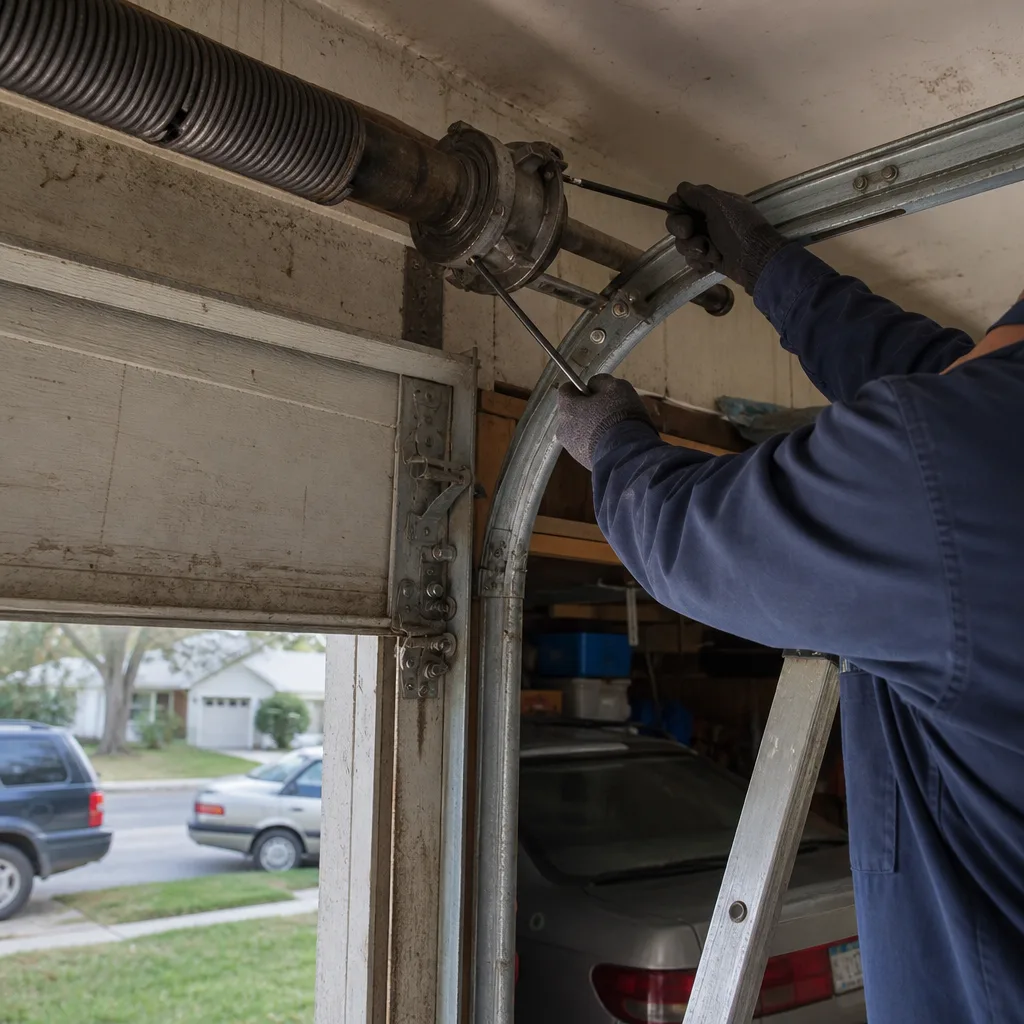 Before
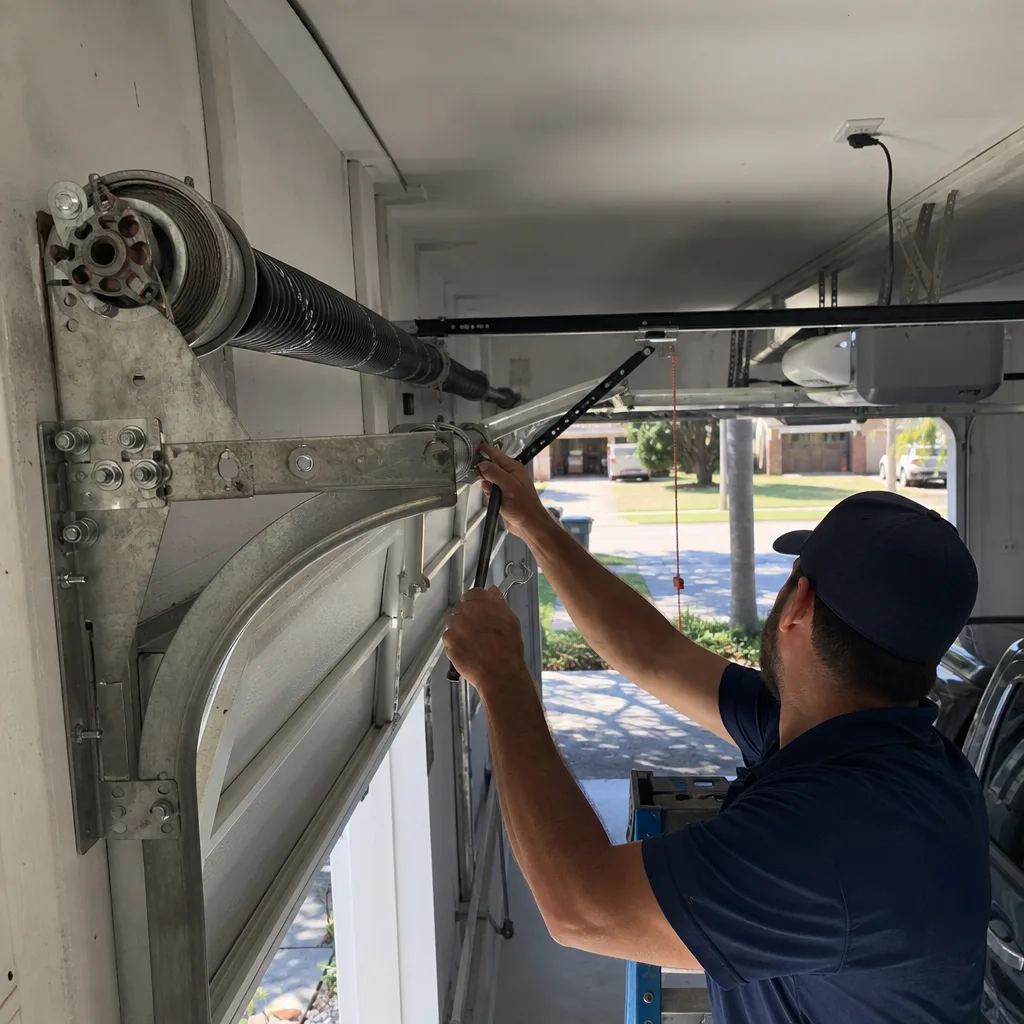 After
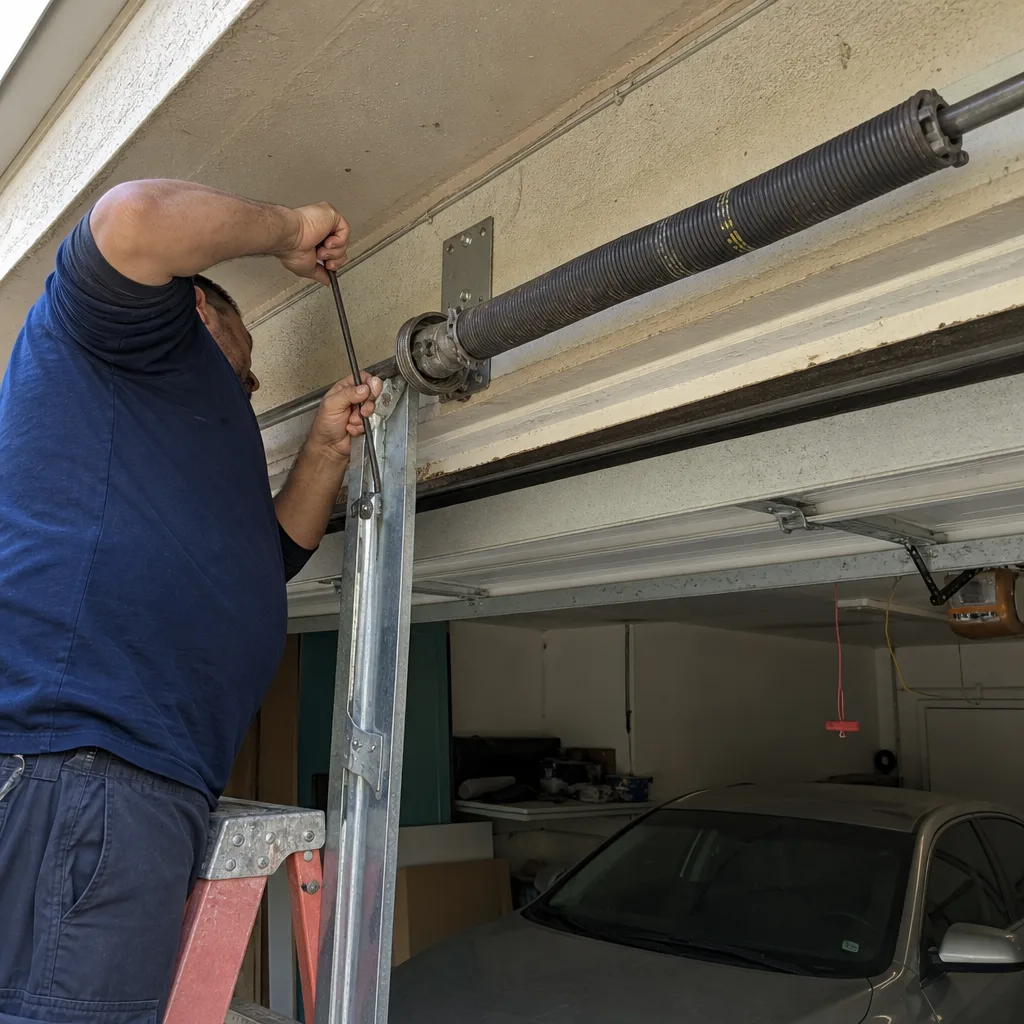 Before
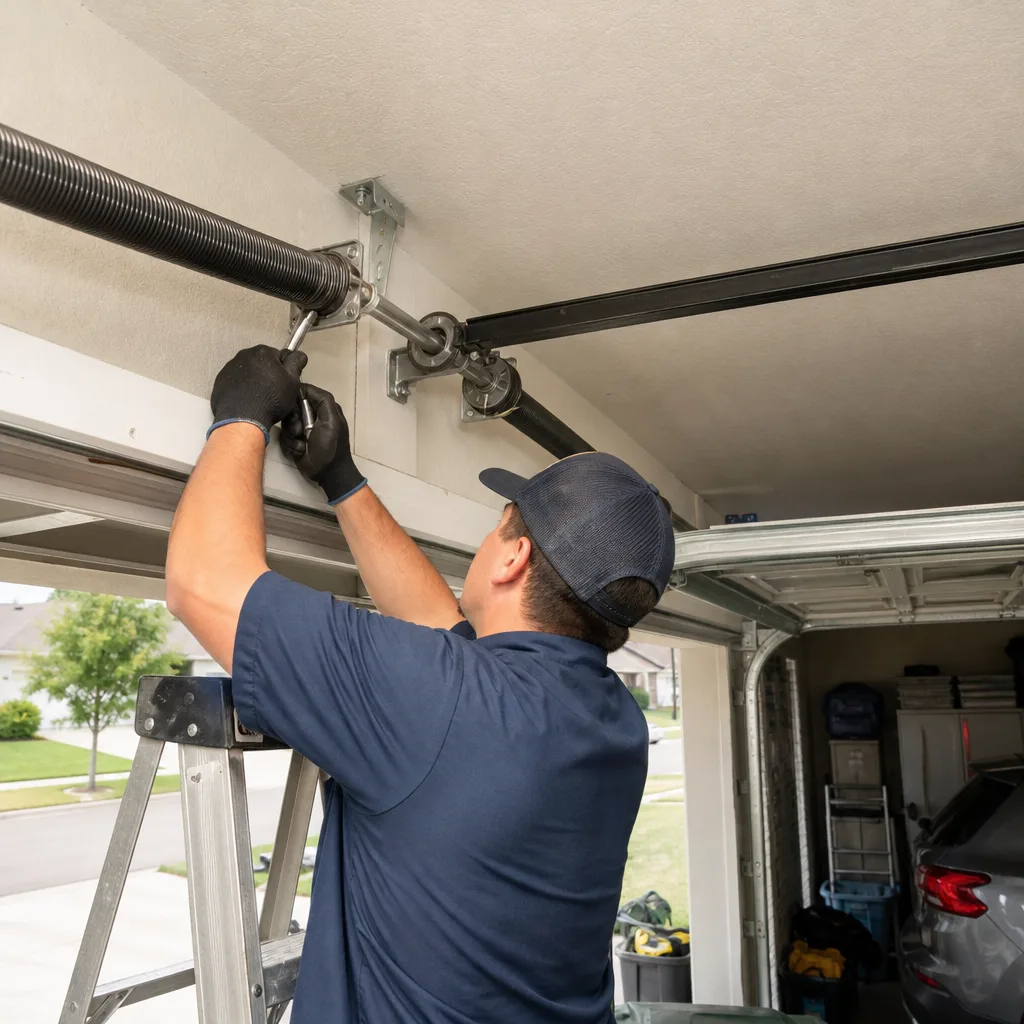 After
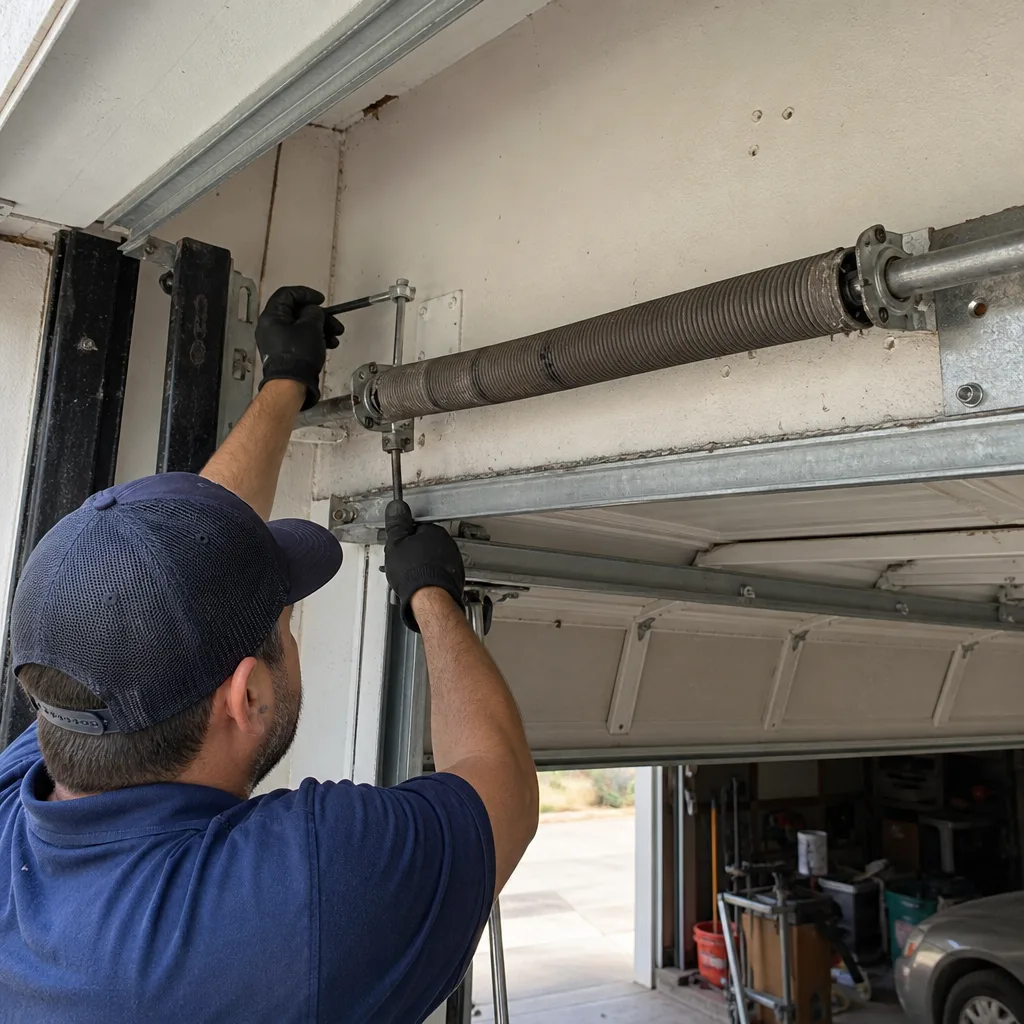 Before
 After
When to Call a Professional
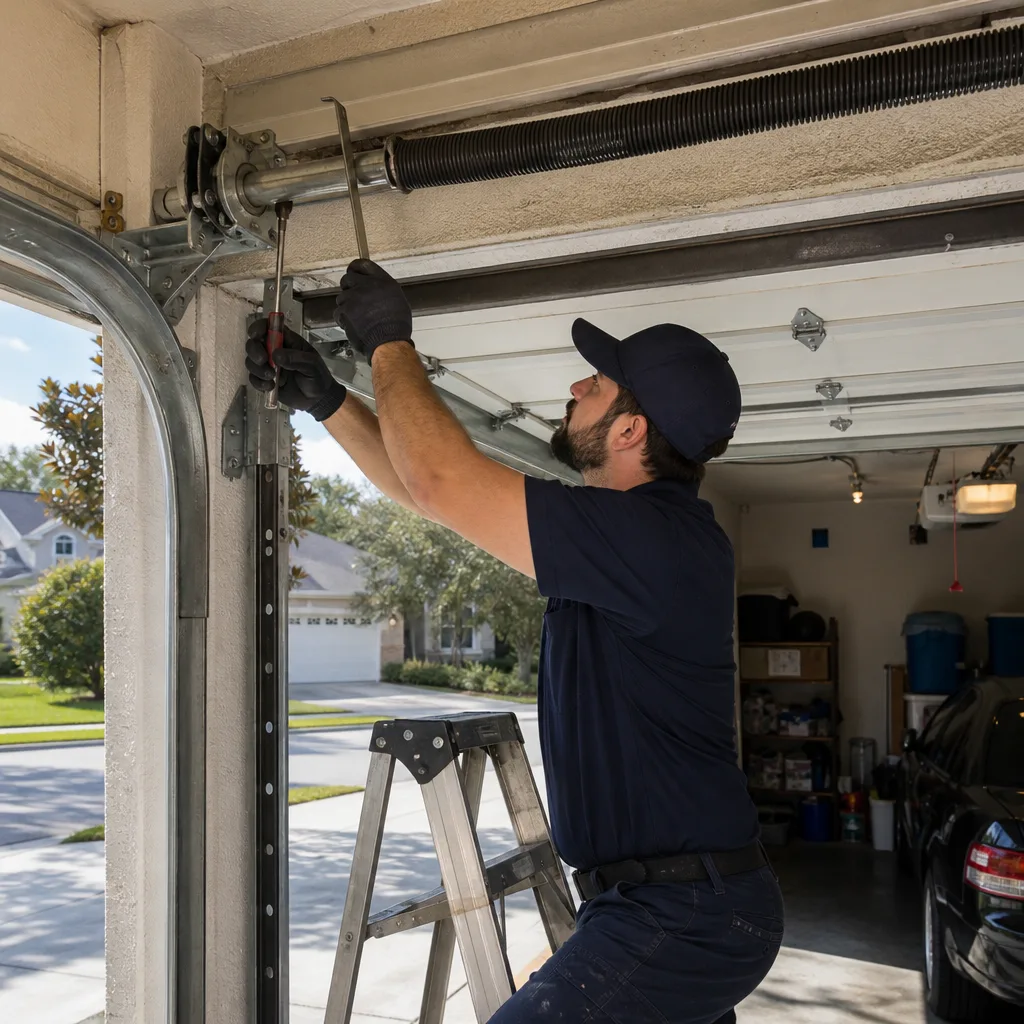
Torsion springs carry enough tension to cause serious injury. If your spring is broken, don’t attempt a DIY replacement. Call a trained technician. The same applies to any issue involving the opener’s motor wiring, track realignment that requires structural adjustments, or a door that’s off its track entirely. These aren’t weekend projects. They’re controlled-hazard repairs that require specific tools and experience.
For everything else, from noisy operation to a door that’s slow to open, a professional diagnosis is often faster and cheaper than replacing parts by trial and error. Carriage Garage Door Repair offers free estimates in Orlando, call (855) 596-4175.
Frequently Asked Questions
A single torsion spring replacement in Orlando typically costs $180 to $320 installed, while a dual-spring replacement runs $300 to $520. The price depends on spring size, galvanized versus standard steel, and whether the door is single or double car. Call us at (855) 596-4175 for an exact quote; estimates are free.
Yes. Most common repairs, including spring replacement, cable repair, and opener sensor issues, are completed same-day in the Orlando metro area. Emergency calls during storm season may see longer response times depending on demand, but standard repairs are typically dispatched within 24 hours.
No. The price we quote is the price you pay. We inspect the door, provide a written number, and don’t begin work until you approve it. If we find additional issues during the repair, we stop and get your approval before proceeding.
We stock parts for the eight brands we service: LiftMaster, Chamberlain, Genie, Clopay, Amarr, Wayne Dalton, Craftsman, and Raynor. For most common failures, that means same-day repair without ordering parts or scheduling a second visit.
Amarr and Clopay both manufacture doors specifically designed for Florida’s wind-load requirements, and both offer galvanized or stainless hardware options. The best brand for your home depends on your HOA requirements, budget, and style. We’ll recommend based on your situation, not on our margin.
In most Orange and Seminole County HOA communities, yes. Architectural review committees typically require written approval before any exterior modification, including garage doors. Check your HOA’s covenants and request the garage door spec sheet before shopping.
The Bottom Line
An Orlando garage door lives in a harder environment than most national guides acknowledge. Humidity eats springs. Thermal cycling strains openers. Slab movement knocks tracks out of alignment. Storm code requires wind-load ratings and battery backups. HOA committees dictate what you can install. None of this is unmanageable if you choose materials and openers built for this climate, maintain them seasonally, and follow the right order: check HOA rules, confirm wind-load compliance, then choose hardware that resists corrosion. For storm-season readiness, see our Garage Door Emergency Preparedness Guide for Orlando Homes. That sequence saves money, avoids inspection failures, and keeps the door operating the way it should through every Central Florida season.
Written by the team at Carriage Garage Door Repair home, serving Orlando since 2016.