Last updated October 30, 2026
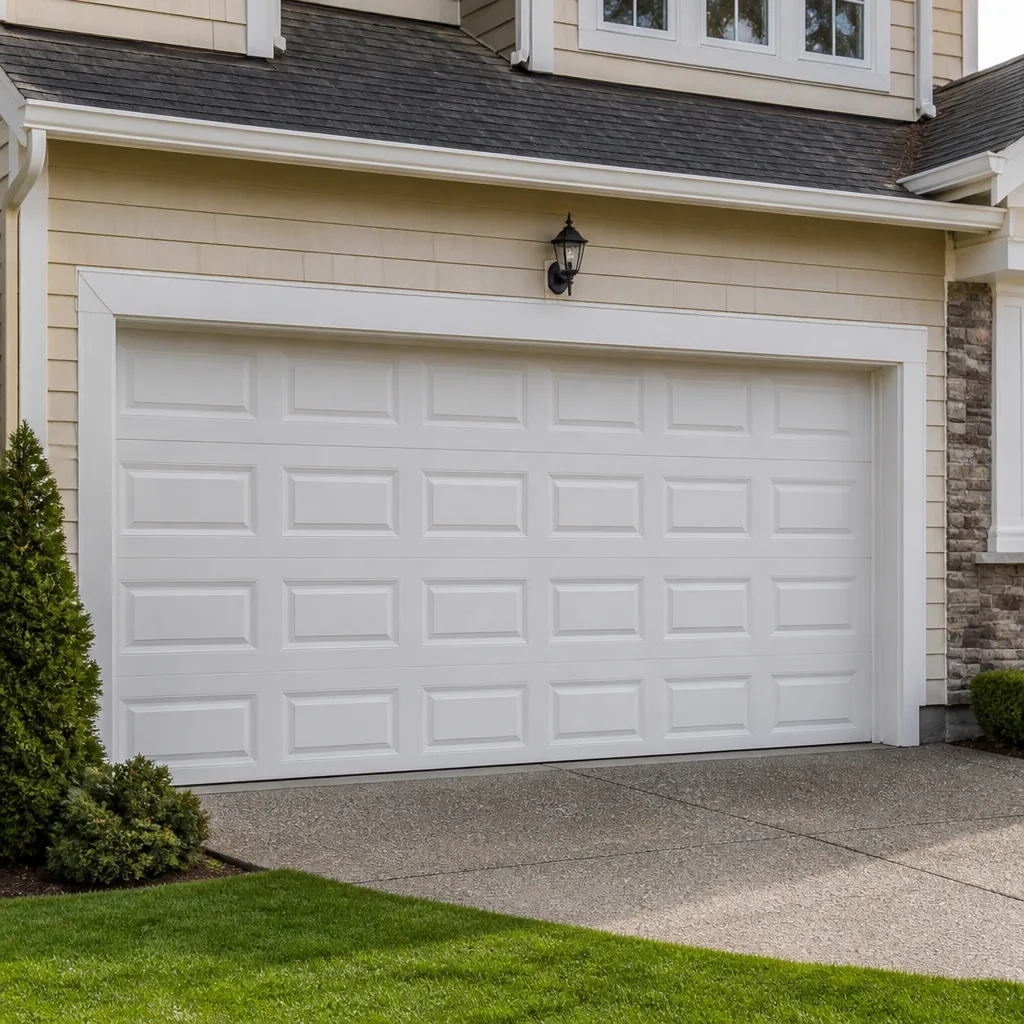 Raised-panel steel
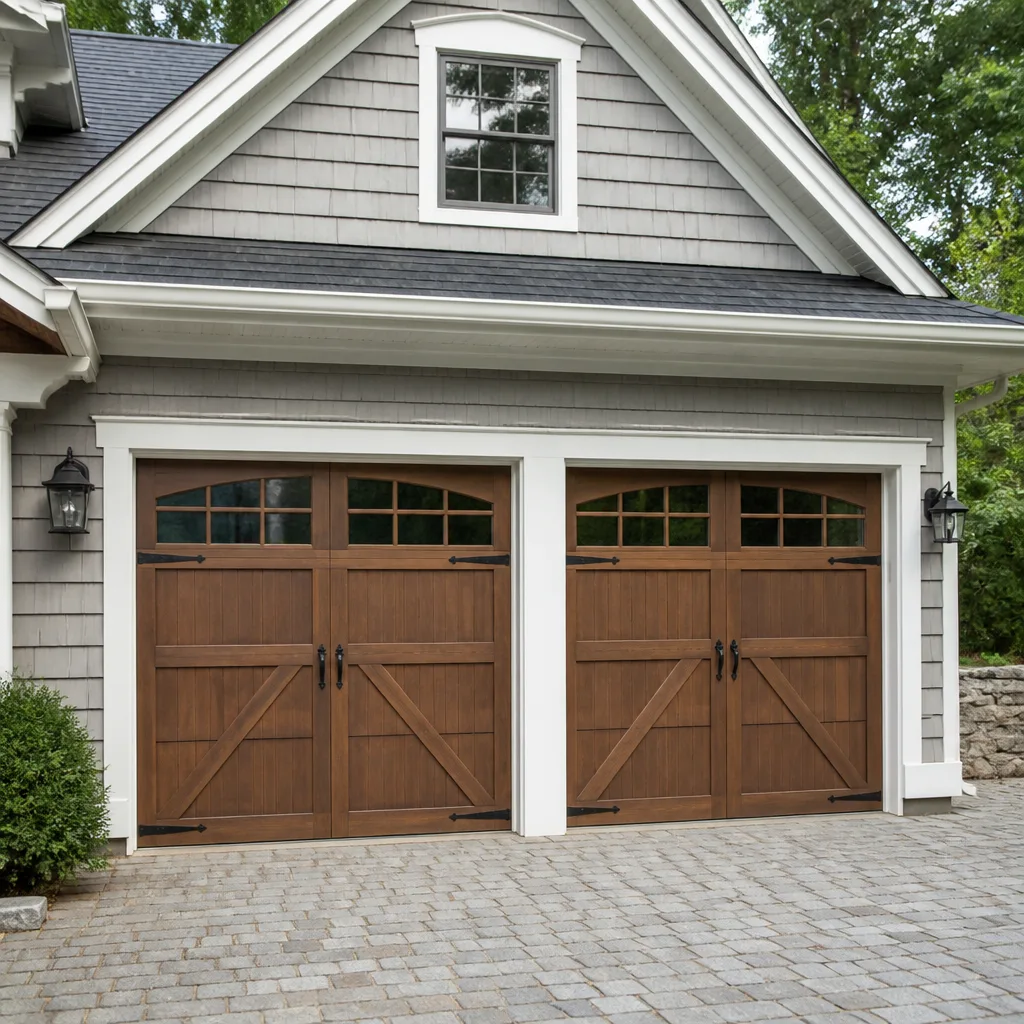 Carriage house
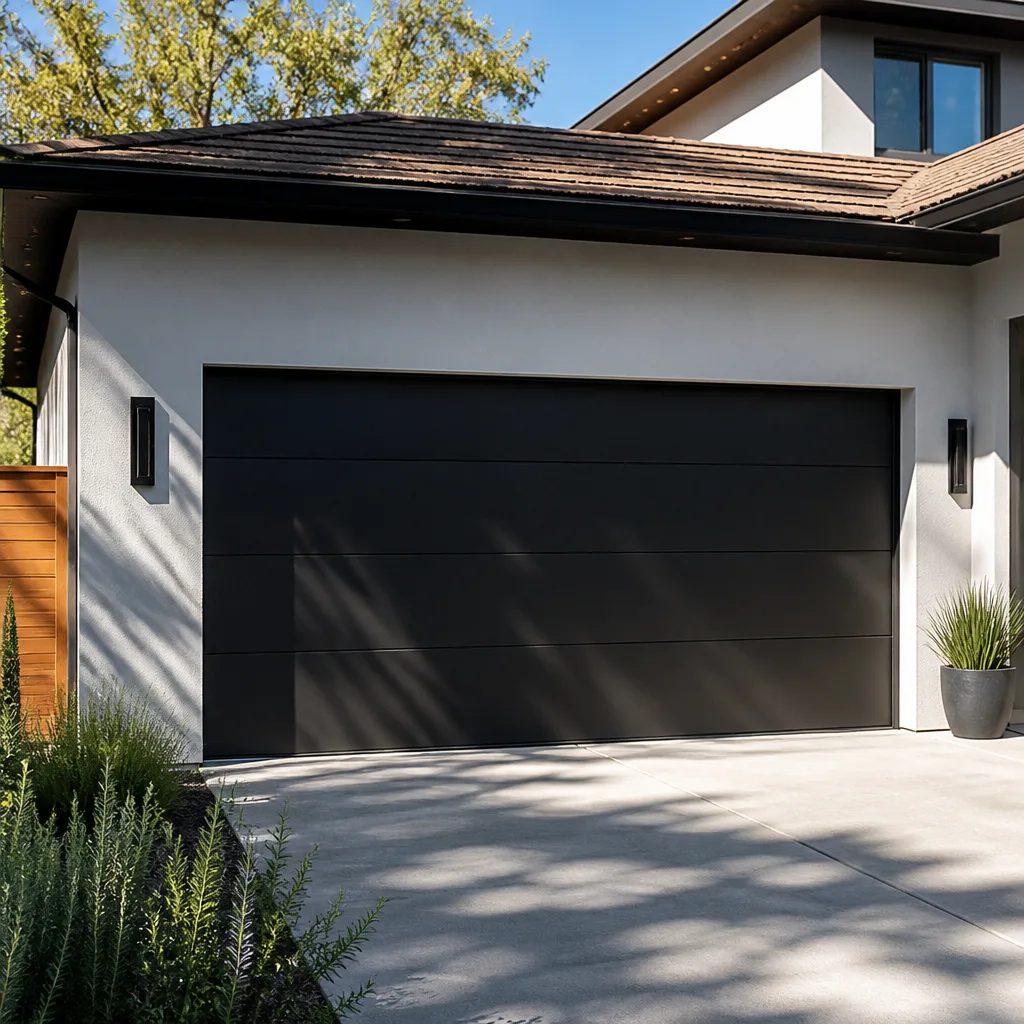 Modern flush
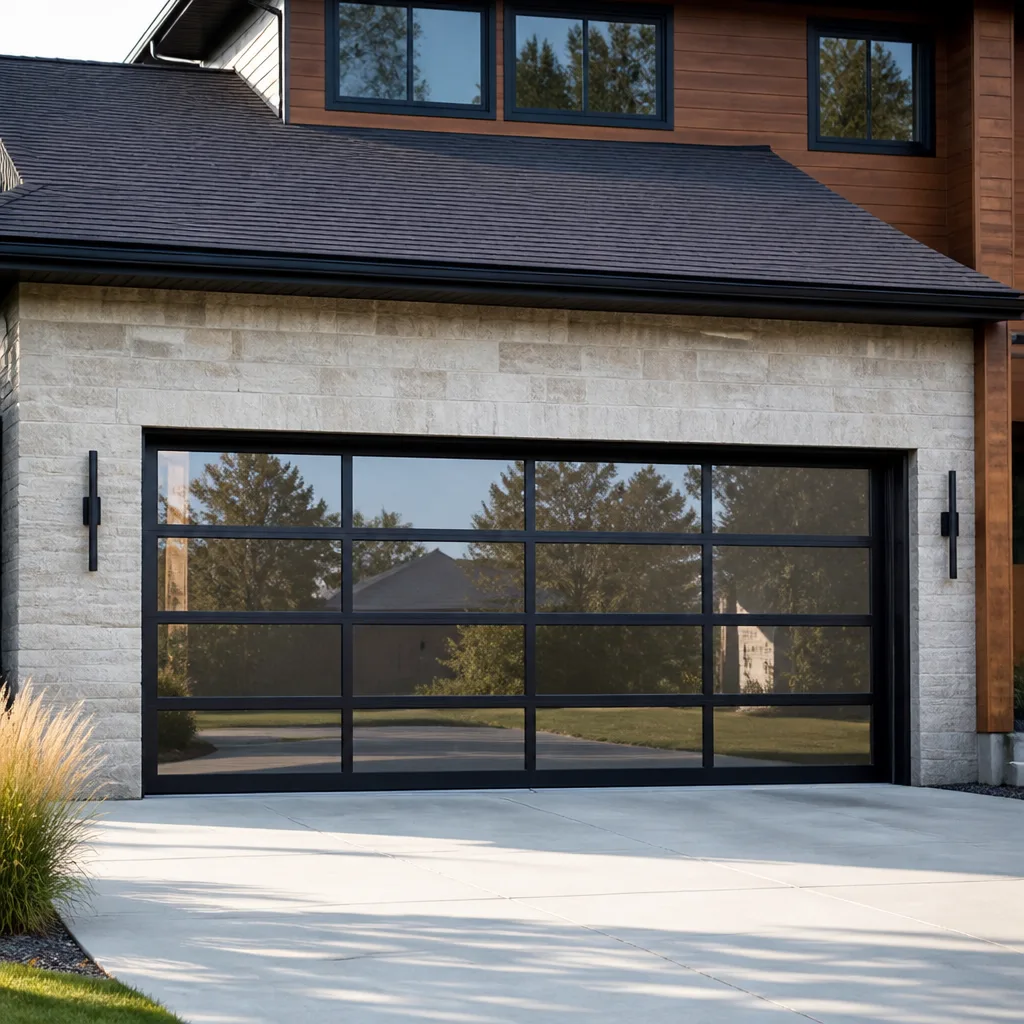 Full-view glass
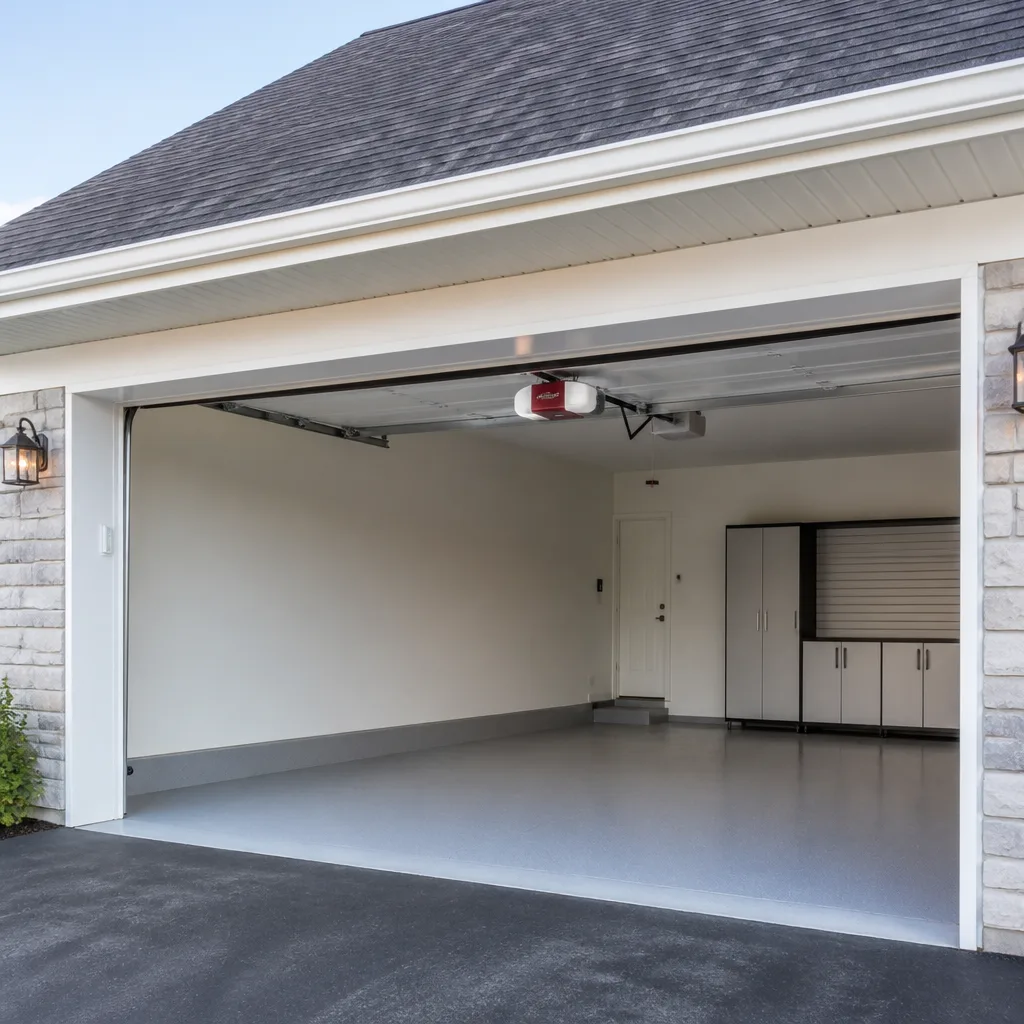 LiftMaster openers
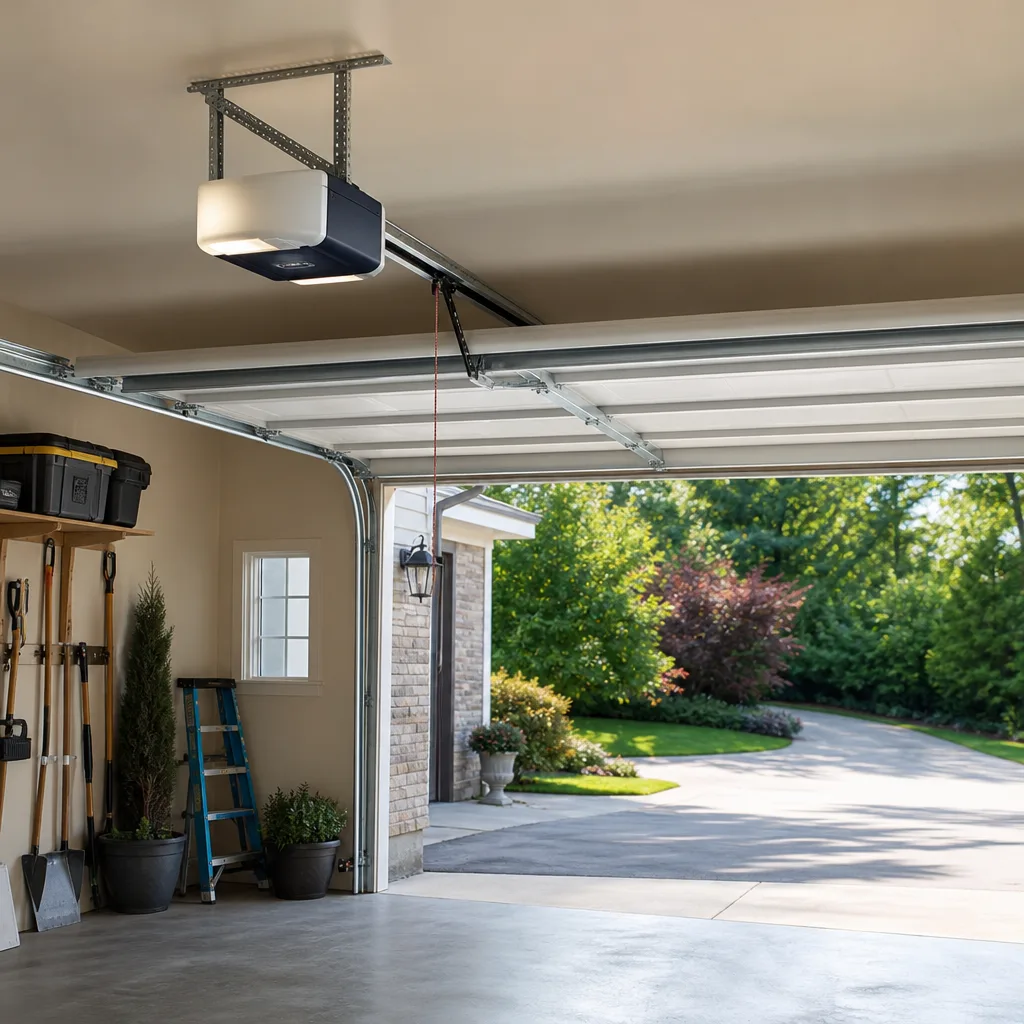 Chamberlain openers
Full 25-point door and opener safety check with every visit - springs, cables, rollers, tracks, and your LiftMaster or Chamberlain opener included
You get a price before we start. It does not change when the truck arrives.
Get your free estimateDIY vs Professional Garage Door: The Orlando Homeowner’s Decision Guide
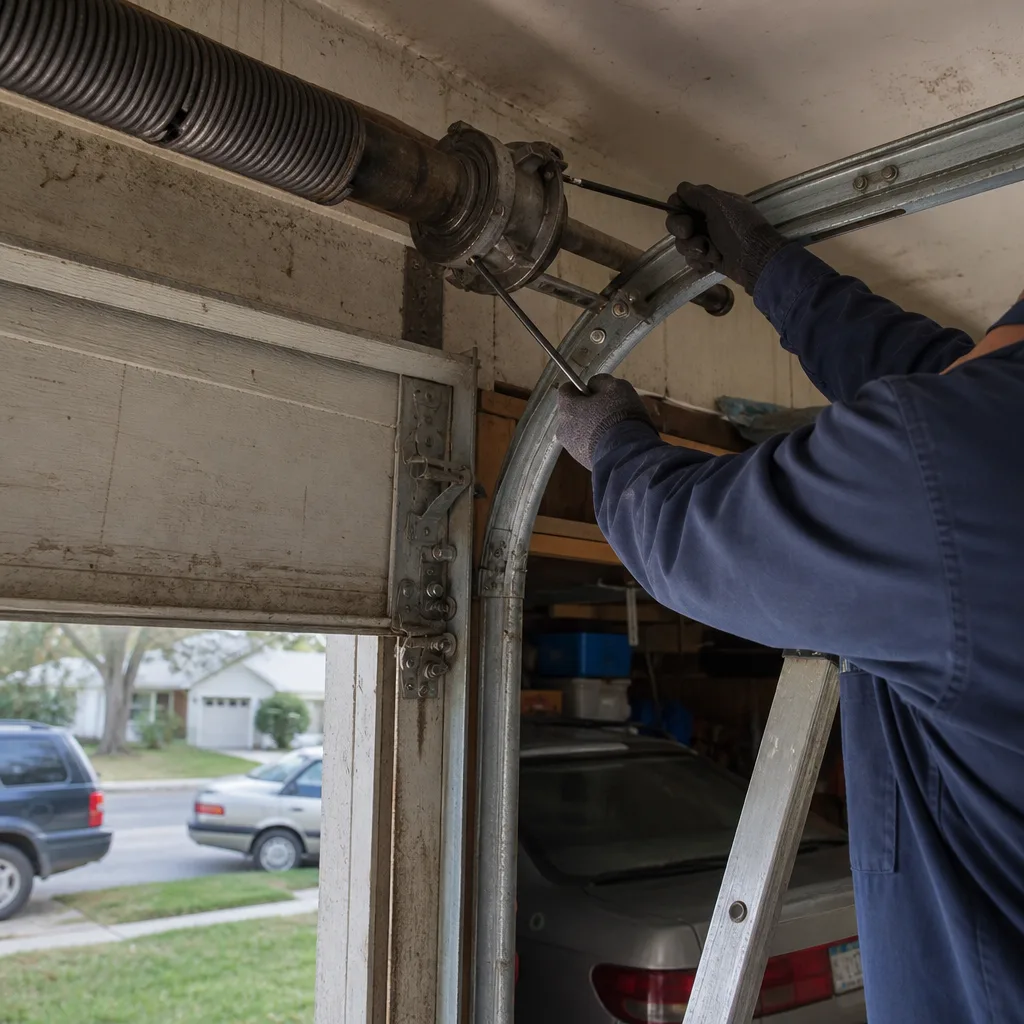
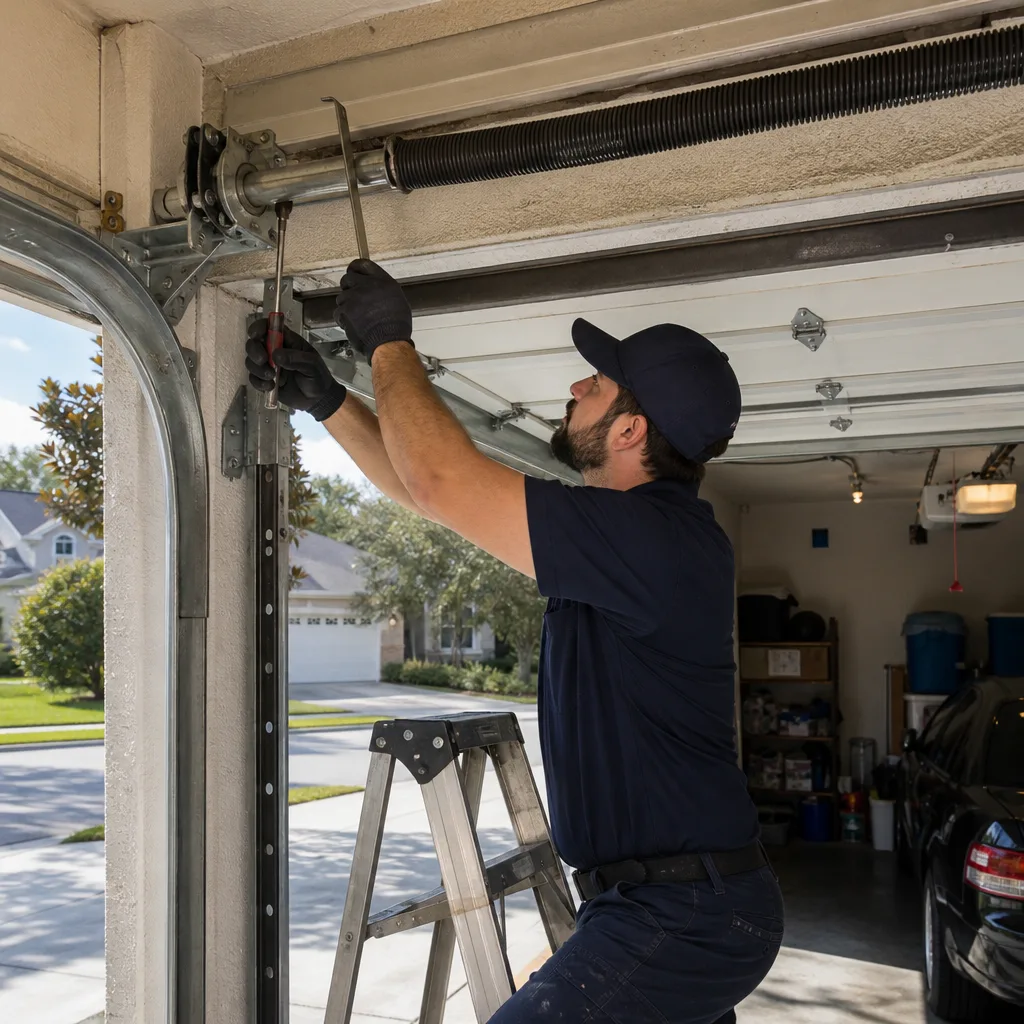
Most homeowners who end up in an emergency room because of a garage door weren’t being reckless. They were following a video. A torsion spring on a double-wide Orlando garage door holds roughly 100 to 150 pounds of torque when fully wound, and when it lets go, it does so in a fraction of a second, faster than any human reflex. This guide is not about convincing you that every garage door task needs a technician. It’s about drawing the line precisely where physics and Florida building code say it belongs, so you can handle the safe jobs with confidence and know exactly when to pick up the phone for garage door repair in Orlando.
Quick Answer
Most garage door tasks are genuinely DIY-friendly, including sensor realignment, track lubrication, weatherstripping, and remote reprogramming. But torsion spring replacement and cable work under tension are physically dangerous regardless of skill level and should be left to a professional. In Orlando, the cost difference between DIY and professional repair is often smaller than people expect once you factor in parts sourcing, permit risk, and the price of fixing a misdiagnosis—see our Garage Door Cost Breakdown: The Orlando Homeowner’s Reference for 2026 for actual numbers.
Styles & brands we work with
Table of Contents
- The Physics That Draws the Line
- What’s Genuinely Safe to Do Yourself
- The Hard Stop List: Never DIY These
- Florida-Specific Considerations: Permits, Humidity, and Hurricanes
- Opener Replacement and the Warranty Trap
- The Cost Reality: When DIY Saves and When It Doesn’t
- Tools and Parts: What You’ll Actually Need
The Physics That Draws the Line
Understanding why some garage door tasks are safe and others are not comes down to one principle: stored energy. Your garage door itself is heavy. A standard 16-foot wide steel door in Orlando weighs between 150 and 250 pounds. The opener is not what carries that weight. The springs do. When the door is down, a torsion spring is wound tight, holding enough stored energy to lift the full weight of the door. That energy is always there, waiting.
Here’s what that means in practical terms:
- Torsion springs sit on a metal shaft above the closed door. They are wound with a specific number of turns based on door weight and height. Each quarter-turn adds tension. A fully wound residential torsion spring can have 24 to 30 quarter-turns of stored force.
- Extension springs run along the horizontal tracks on each side. When the door is closed, they are stretched to maximum length. If one breaks, it releases all its energy at once.
- Cables work with the springs. They are under constant tension and route around pulleys and drums. A frayed cable that snaps near your face or hands is a serious injury event.
We’ve repaired doors in neighborhoods across Orlando where a homeowner attempted to unwind a torsion spring with a screwdriver and a pair of locking pliers. In a few cases, they were lucky. In others, they came away with fractured fingers and a door that now had a bent shaft, requiring a full spring assembly replacement instead of a simple spring swap. The door mechanics do not care how careful you intend to be.
This physical reality is not a scare tactic. It’s the same reason electricians tell you to shut off the breaker and still recommend calling a pro for panel work. The risk is not in knowing what to do. It’s in what happens during the half-second when something goes wrong.
What’s Genuinely Safe to Do Yourself
Plenty of garage door maintenance and minor repair tasks are well within reach of a careful Orlando homeowner. These jobs share a common trait: they involve components that are not under high tension and can be completed with basic tools. Here’s what you can handle, with enough detail to do it right.
1. Sensor Alignment
The photo-eye sensors near the bottom of each door track can drift out of alignment from a bumped ladder, a passing bike, or even the door’s own vibration. Symptoms are straightforward: the door starts to close, then reverses. One sensor light is usually solid, the other blinking or dark.
To fix this:
- Loosen the wing nut holding the blinking sensor in place.
- Adjust the sensor so the small light turns solid and stays solid when the door is in the open position.
- Tighten the wing nut gently. Overtightening can crack the plastic housing.
- Test the door. If it still reverses, check for a loose wire connection at the sensor or the opener motor.
2. Track Lubrication
An Orlando garage door that groans or sounds gritty needs lubrication. Humidity here accelerates rust on steel tracks, especially in older homes in College Park or Winter Park where doors may be a decade old or more. Use a white lithium grease or a garage door-specific spray, not WD-40, which is a solvent and will strip existing lubrication.
Apply grease to the track where the rollers travel, the roller bearings themselves if accessible, and the hinge points. Wipe away excess with a rag. Do this twice a year, before the humid season and again in the fall.
3. Weatherstripping and Bottom Seal Replacement
The rubber strip along the bottom of your door keeps out rainwater, dust, and insects. Orlando’s summer downpours will find any gap. Replacing a worn seal is a 20-minute job. You’ll need a utility knife to cut the old seal to length, a new seal (available at hardware stores or from us if it’s a Clopay or Amarr-specific profile), and a little patience to slide it through the retainer channel.
4. Remote Reprogramming
If your opener is a Genie, LiftMaster, or Chamberlain, the remote programming sequence varies slightly by model, but the general principle is the same: locate the learn button on the motor unit, press it, then press the button on the remote within 30 seconds. If the opener is older and uses DIP switches, match the switch pattern on the remote to the pattern on the motor. This is purely electronic, no mechanical risk involved.
For any of these tasks, the rule of thumb is simple: if the component you’re touching is not under spring tension and does not require disconnecting the door from the opener while the door is closed, you’re likely in safe territory. And if you’re not sure, that answer itself is useful information.
The Hard Stop List: Never DIY These
There are specific garage door components where failure mode involves the sudden release of stored mechanical energy. No tutorial can prepare you for how fast these failures happen, because the failure is not predictable in the way a stripped screw or a dead battery is predictable.
- Torsion spring replacement. A broken spring means one or both springs have already failed. The remaining spring, if one is still intact, is under load. Winding or unwinding any torsion spring without a professional winding bar system, and without the experience to read a spring’s tension state by feel, is the single most dangerous DIY task in residential home ownership. We have seen the aftermath in Orlando homes in Dr. Phillips and Baldwin Park where a homeowner’s forearm took the full force of an unwinding spring. The surgery costs more than the repair would have.
- Cable replacement or rewinding. Cables route around drums at each end of the torsion shaft. If a cable is frayed, it is already failing. Releasing cable tension requires unwinding the spring system, which brings you right back to the hard stop above. A cable that snaps while you’re working near it moves at the speed of a whip.
- Bottom bracket work. The bottom corner brackets hold the cables and are connected to the spring tension system. Even if you manage to unbolt them, the cable tension will pull them violently upward the moment the bolts are loose. This is not a job for gloves and eye protection; it’s a job for someone who has done it a hundred times.
- Track replacement under a loaded door. Track sections that are bent or damaged while the door is connected to springs are under lateral force. Unbolting a track bracket on a loaded door can cause the door to shift suddenly. This is why track work is almost always done in conjunction with spring tension management.
These are not tasks where you “just need to be careful.” They are tasks where the correct tool is a pair of hardened steel winding bars and the correct knowledge is years of repetition. If you’re considering any of these, the honest advice is the same advice we’d give our own family in Orlando: call someone who does this work full time.
Florida-Specific Considerations: Permits, Humidity, and Hurricanes
Orlando homeowners face a set of conditions that most generic garage door advice ignores. The Florida Building Code has specific wind-load requirements for garage doors, especially in hurricane-prone regions—details covered in our Garage Door Permits, Codes & Inspections in FL: What You Need to Know. Central Florida is not coastal, but the county’s wind zone ratings are higher than what a national big-box store door might be rated for.
Here’s what that means for a DIY-minded homeowner:
- Structural panel replacement on your existing garage door may trigger permit requirements, even for a homeowner doing the work. Replacing an entire panel changes the door’s structural configuration. If your door is from Clopay or Amarr, the panel is part of a wind-load-rated assembly. Swapping in a different panel, or a panel from another manufacturer, can void that rating.
- Humidity is a year-round factor in Orlando. Wood doors, while rare in newer construction, absorb moisture and swell. Steel doors with compromised seals rust from the inside out. A DIY repair that does not address the underlying moisture path will fail again within a season or two.
- Hurricane reinforcement is a real code consideration. Retrofitting a garage door to meet wind-load requirements, or repairing a door that has been through a storm, is not a cosmetic job. The anchoring points, the struts, and the track mounting all work together as a system. If any one part is compromised, the entire door can fail under wind pressure.
- Orlando’s soil and settling affects door alignment over time. Homes in older neighborhoods like Delaney Park or Thornton Park may have garage slabs that have shifted slightly, causing the door to sit unevenly. This is a foundation issue as much as a door issue, and it often requires a professional to shim and rebalance the system.
The practical takeaway: in Florida, even a “simple” structural repair can have code implications that a homeowner won’t be aware of until an inspection fails, an insurance claim gets complicated, or an emergency strikes without warning—our Garage Door Emergency Preparedness Guide for Orlando Homes covers what to expect. When in doubt, a call to a licensed professional is cheaper than the alternative.
Opener Replacement and the Warranty Trap
Replacing a garage door opener looks approachable. It’s a box that plugs into an outlet, with a rail and a few bolts. People do it themselves every weekend. But here’s what most DIY guides won’t tell you: installing an opener incorrectly can void the manufacturer’s warranty on a brand-new unit, and the error that voids it is almost always invisible to the person who made it.
Warranty language from Genie, LiftMaster, and Chamberlain is specific about installation requirements. If the opener is installed without a properly balanced door, meaning the springs are not correctly tensioned, the opener motor works harder than it was designed to. Early motor failure is the result. When you file a warranty claim, the manufacturer asks for install documentation and may send a technician to inspect. A door that is out of balance at the time of the failure ends the claim.
This is the trap: you save $150 to $300 on installation labor, then eat the full cost of a failed opener motor a year later because the real problem was a weak spring that no DIY installation would have caught. The right diagnosis is the thing you’re paying for when you hire a pro.
Our stance at Carriage Garage Door Repair is straightforward. We’d rather see an opener installed correctly the first time than replace it under warranty later. If you’re considering a DIY opener swap, at minimum, have the door balance checked before you start. A properly balanced door should stay in place when opened halfway, without drifting up or down. If it drifts, the springs are the problem, not the opener.
The Cost Reality: When DIY Saves and When It Doesn’t
Let’s talk about actual numbers in the Orlando market, because most online advice gives ranges so broad they’re useless.
Where DIY genuinely saves money
- Weatherstripping: A bottom seal costs $20 to $40 at a hardware store. A professional replacement runs $90 to $150. This is a clear DIY win.
- Sensor cleaning and alignment: Free if you already have a screwdriver and a clean rag. This is the most common “repair” that isn’t a repair at all.
- Lubrication: A $10 can of white lithium grease lasts years. We carry the same product on our trucks.
- Remote replacement: A universal remote is $25 to $40 and takes five minutes to program. No reason to pay for service here.
Where DIY becomes more expensive than professional
- Torsion spring replacement: A pair of springs costs $60 to $120 online. Professional replacement in Orlando runs $180 to $350 including parts and labor. The catch: if you wind a spring incorrectly and it unwinds suddenly, you’re now paying for a new spring assembly, possibly a new torsion shaft, and an ER visit. The “savings” can turn into a $2,000-plus net loss.
- Misdiagnosed opener failure: The opener won’t open the door. You assume the opener is dead. You buy a new one for $200 to $350, install it, and the door still won’t open. The real issue was a broken spring, which costs $180 to $300 to replace. You’re now out the opener cost, your time, and the spring repair. A professional diagnosis would have caught this in five minutes.
- Cable replacement: Cables are cheap, $15 to $30 for a pair. But replacing cables requires releasing spring tension. If you damage the drum or the shaft in the process, the repair goes from $150 to $400-plus. This is the most common DIY escalation we see in Orlando.
- Track realignment after a “simple” repair: You lubricate, you adjust, you tinker. The door now runs slightly off-square, wearing rollers unevenly. Six months later, a roller breaks, and the door jams. A professional tune-up would have cost $100 to $150. The cascade repair is double that.
The honest math is this: DIY saves money on components that are not mechanically connected to the spring system. The moment you touch anything under tension, or anything that affects the door’s balance, a professional is not a luxury. They’re the cheaper option.
Tools and Parts: What You’ll Actually Need
If you’re planning to handle the safe DIY tasks we’ve outlined, here’s what we recommend having on hand, and you can find more guides & resources on our blog. This is not a sales pitch. Nothing here is proprietary.
- White lithium grease or garage door-specific lubricant. One can, twice a year, done.
- Flathead and Phillips screwdrivers. For sensor alignment and remote battery replacement.
- Utility knife. For weatherstripping work. A dull blade makes this job twice as hard.
- A clean rag and a basic degreaser. For wiping down tracks before lubricating.
- A step ladder. Nothing on the safe list requires getting on the roof or working above head height for extended periods.
If you’re buying parts, know your door’s brand. A weatherstripping profile for a Wayne Dalton door is different from an Amarr or Clopay profile. Our team carries brand-specific parts for all eight brands we service, which is why we can do same-day diagnosis without waiting on shipments. If you’re sourcing your own parts, bring the old one with you to the store or match the manufacturer part number, not just the visual appearance.
Common Mistakes to Avoid
- Using WD-40 on tracks or hinges. WD-40 is a solvent, not a lubricant. It cleans, then it dries. You’ll be left with metal-on-metal wear a week later.
- Adjusting spring tension based on a YouTube video. This is the mistake we see most often in Orlando, and it is the one that hurts people. The video does not tell you what a properly balanced door feels like. It cannot convey the resistance of a torsion spring that is about to bind.
- Ignoring a slow or uneven door movement. A door that opens slightly faster on one side is a balance issue. Every week you ignore it, the rollers and hinges wear faster. Eventually something fails under load.
- Replacing the opener before checking the springs and balance. This is the most expensive misdiagnosis in garage door repair, and it’s entirely preventable with a simple balance test.
- Skipping the permit check for structural garage work in Orlando. Many homeowners assume garage door repairs are cosmetic. In Florida, structural changes to a wind-rated door system are not.
- Buying the cheapest spring online. A $30 spring that is the wrong wire gauge or the wrong length will not balance the door. An unbalanced door destroys openers, rollers, and hinges. The $70 you saved becomes a $400 repair.
- Forgetting that Orlando’s humidity is a constant adversary. The same repair done in Arizona or Nevada will last longer there than here. Our climate accelerates rust and seal degradation. Maintain on a schedule, not just when something breaks.
See the difference
 Before
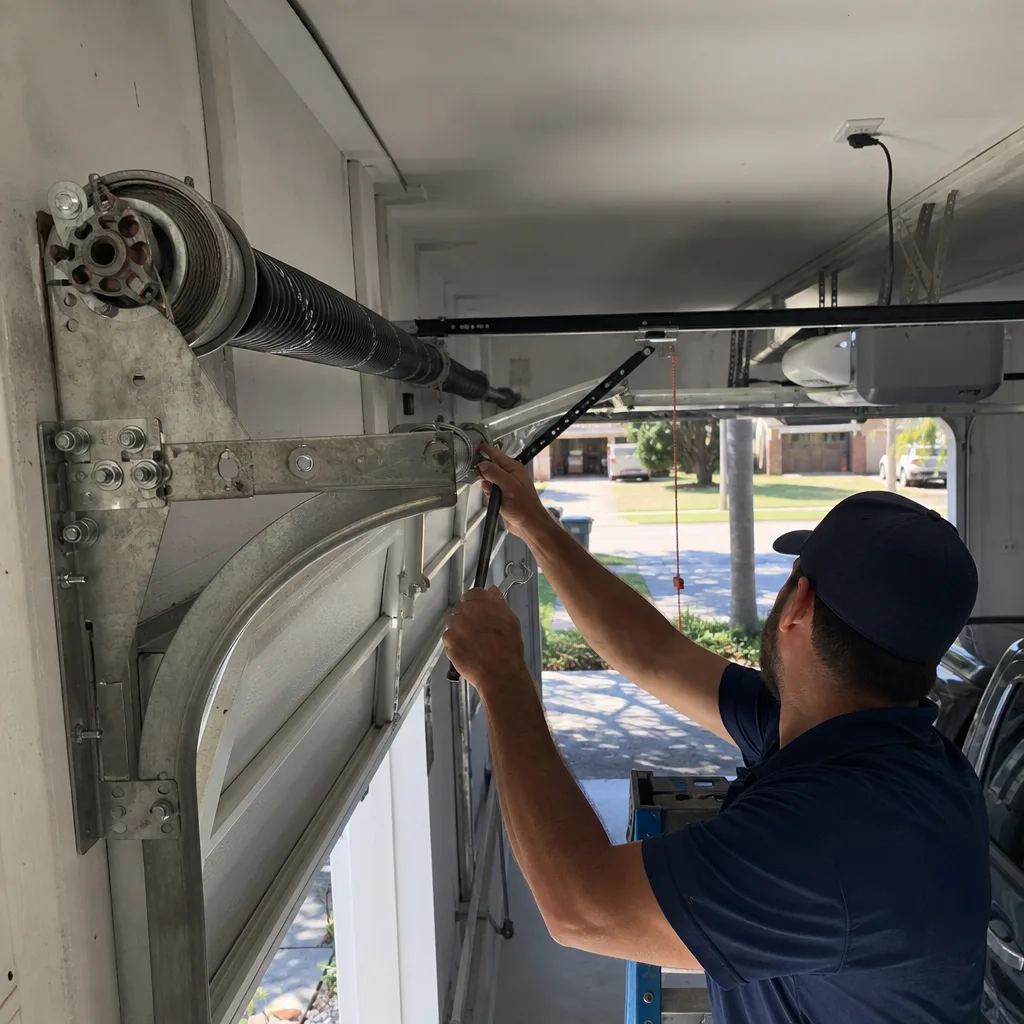 After
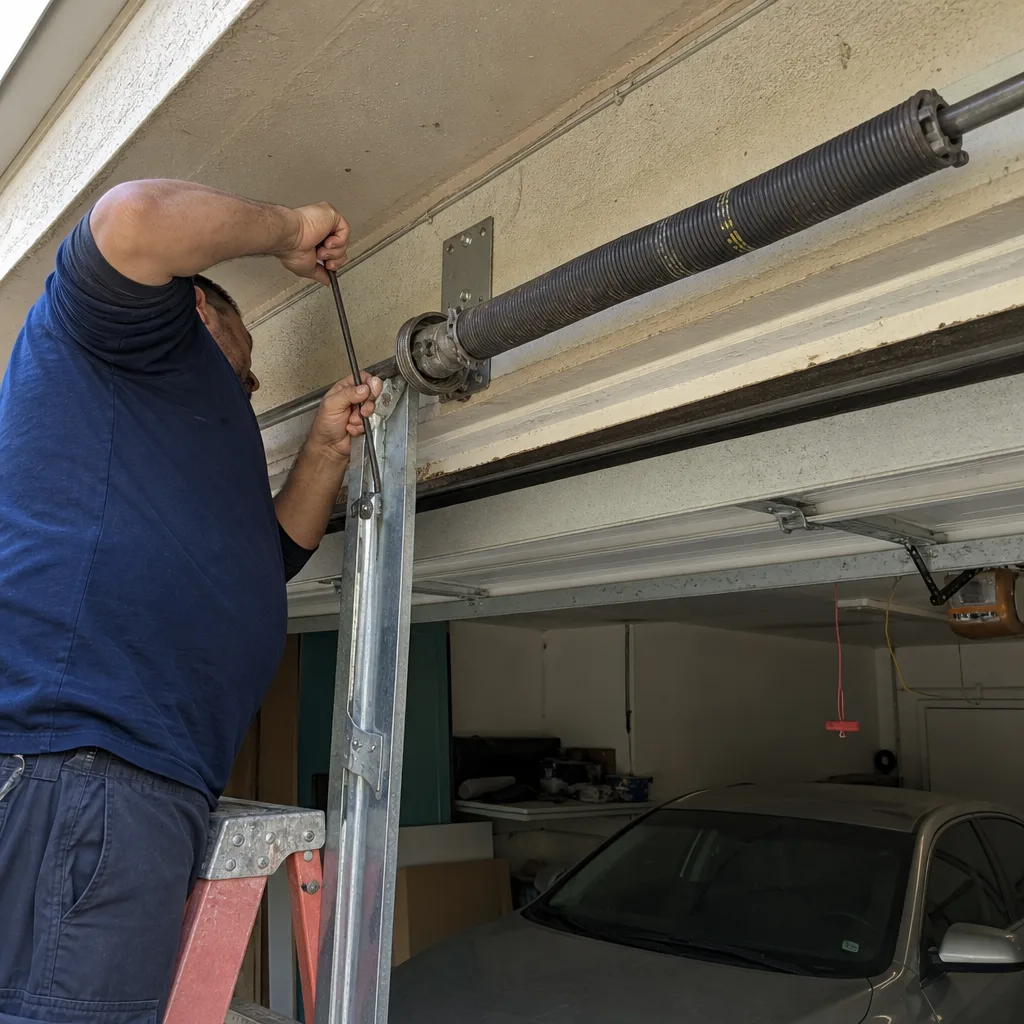 Before
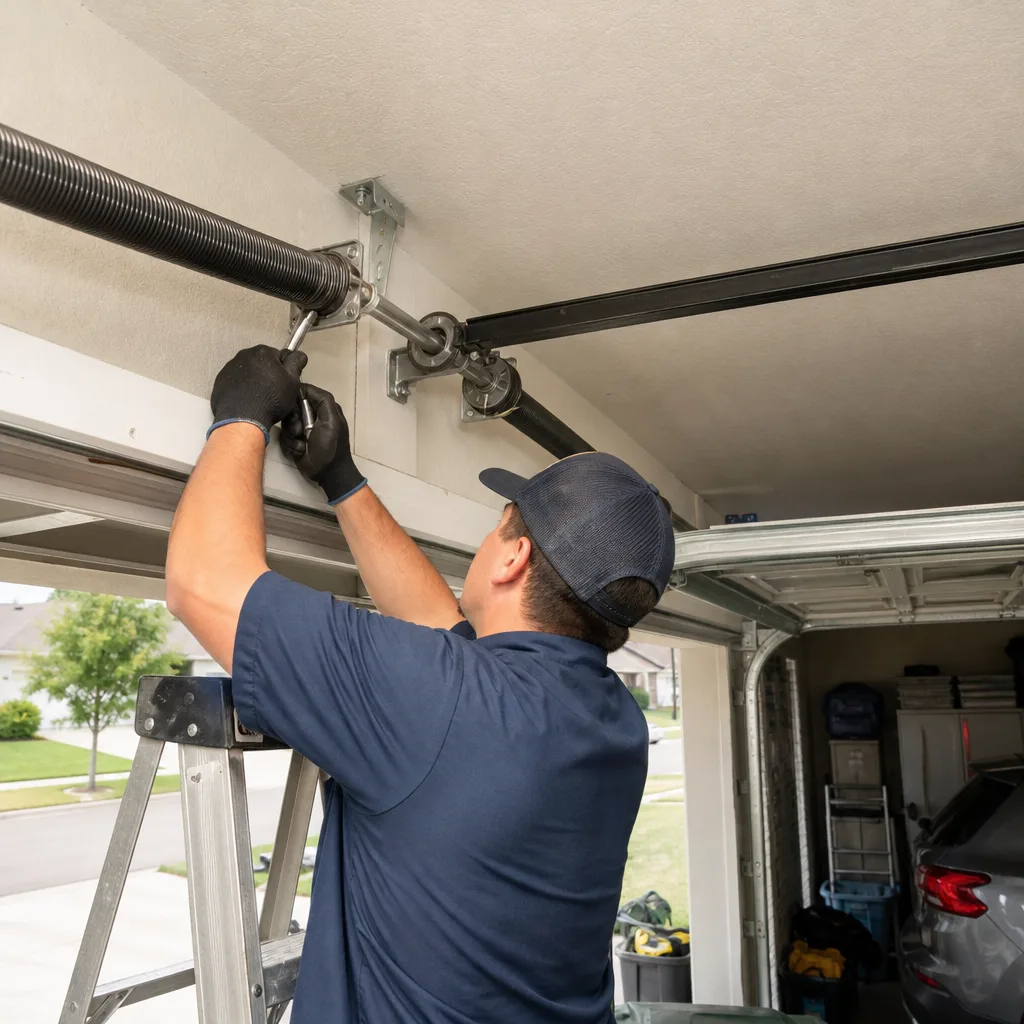 After
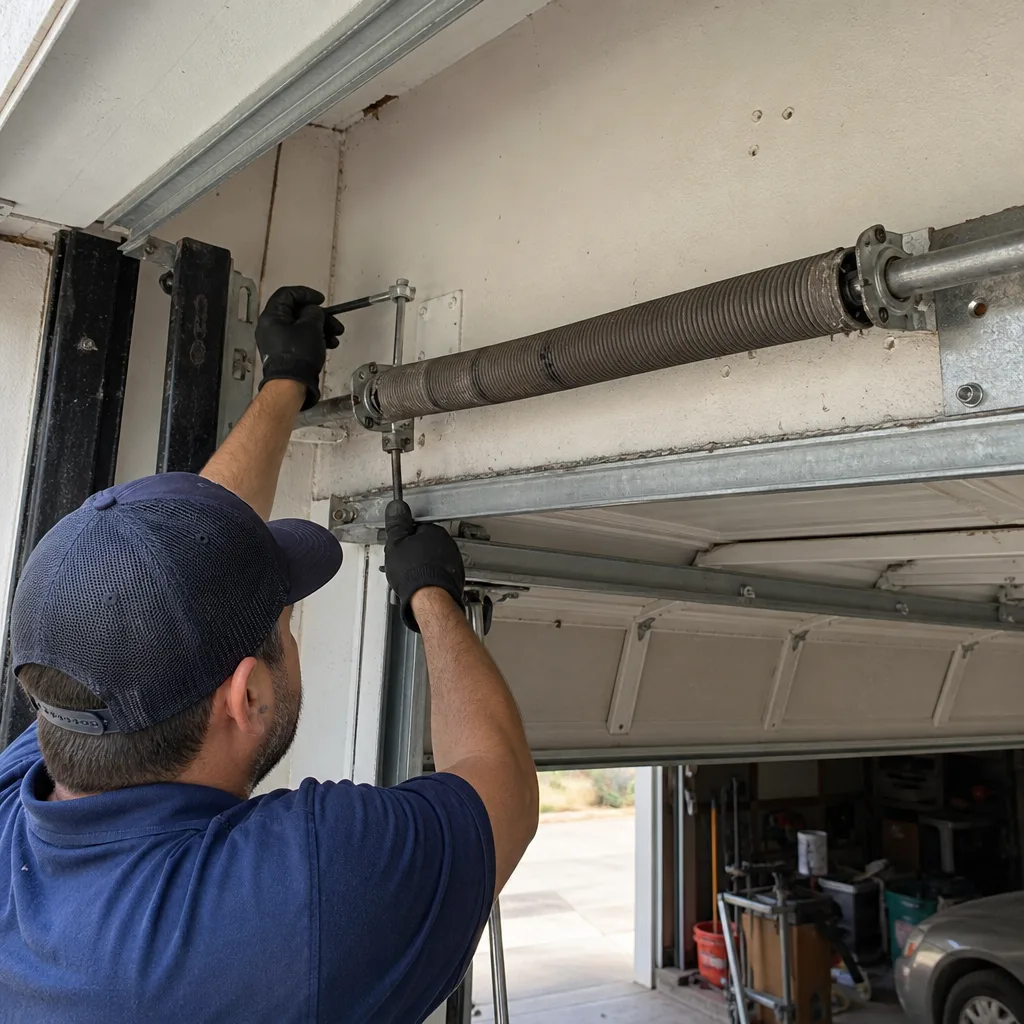 Before
 After
When to Call a Professional
Call a professional when the component you’re touching is under spring tension, when the door is visibly unbalanced, when you hear a loud bang and the door will not open, or when a structural panel or track is damaged. In any of these situations, the risk of injury is real and the cost of a wrong move is higher than the service call. Carriage Garage Door Repair offers free estimates in Orlando. Call (855) 596-4175 and we’ll tell you over the phone whether it’s a task you can handle yourself or one that needs a truck. If we can save you a service call, we will. That’s how we operate.
Frequently Asked Questions
No, it is not safe. Torsion springs hold enough stored energy to cause serious injury, including broken bones and deep lacerations, if they release suddenly. This is a professional-only repair. For a free estimate in Orlando, call (855) 596-4175.
You can safely handle sensor realignment, track lubrication, weatherstripping replacement, and remote reprogramming. These tasks do not involve spring tension or structural components. If the task requires touching a cable, a spring, or a bottom bracket, stop and call a professional.
In the Orlando market, torsion spring replacement typically costs between $180 and $350 including parts and labor, depending on the door weight and spring type. The price is quoted and agreed before work starts, so there is no surprise invoice. Call (855) 596-4175 for a firm quote.
In many cases, yes, especially for structural panel replacement or full door replacement. Florida building code applies wind-load requirements to garage doors, and altering a rated system can trigger an inspection. A professional installer will know what applies to your specific situation.
It can. If the door was out of balance at the time of installation, which is a common situation in Orlando homes, the opener motor works harder than designed. A subsequent motor failure can be denied under warranty because the root cause was an unbalanced door, not a defective opener.
Usually yes. A grinding noise is most often dry rollers or hinges. Lubricate with white lithium grease, not WD-40. If the noise persists after lubrication, the rollers may be worn or the door may be out of balance, and that’s a professional job. For garage door opener repair in Orlando, call (855) 596-4175 for a diagnosis.
The Bottom Line
The DIY versus professional question for garage doors in Orlando has a clean answer once you understand the physics. Tasks that involve stored mechanical energy – torsion springs, cables, bottom brackets – are professional work, not because a homeowner lacks intelligence but because the failure mode is too fast to react to. Tasks that involve lubrication, alignment, weatherseals, and electronics are genuinely approachable with the right information. The most expensive mistake in garage door repair is not the part you buy. It’s the misdiagnosis that leads you to replace a component that was never the problem. When the stakes are high, get the diagnosis right the first time. For garage door installation in Orlando, repair, or a professional opinion on a job you’re not sure about, Carriage Garage Door Repair is one call away. Carriage Garage Door Repair home.
Written by the team at Carriage Garage Door Repair, serving Orlando since 2016.