Last updated October 30, 2026
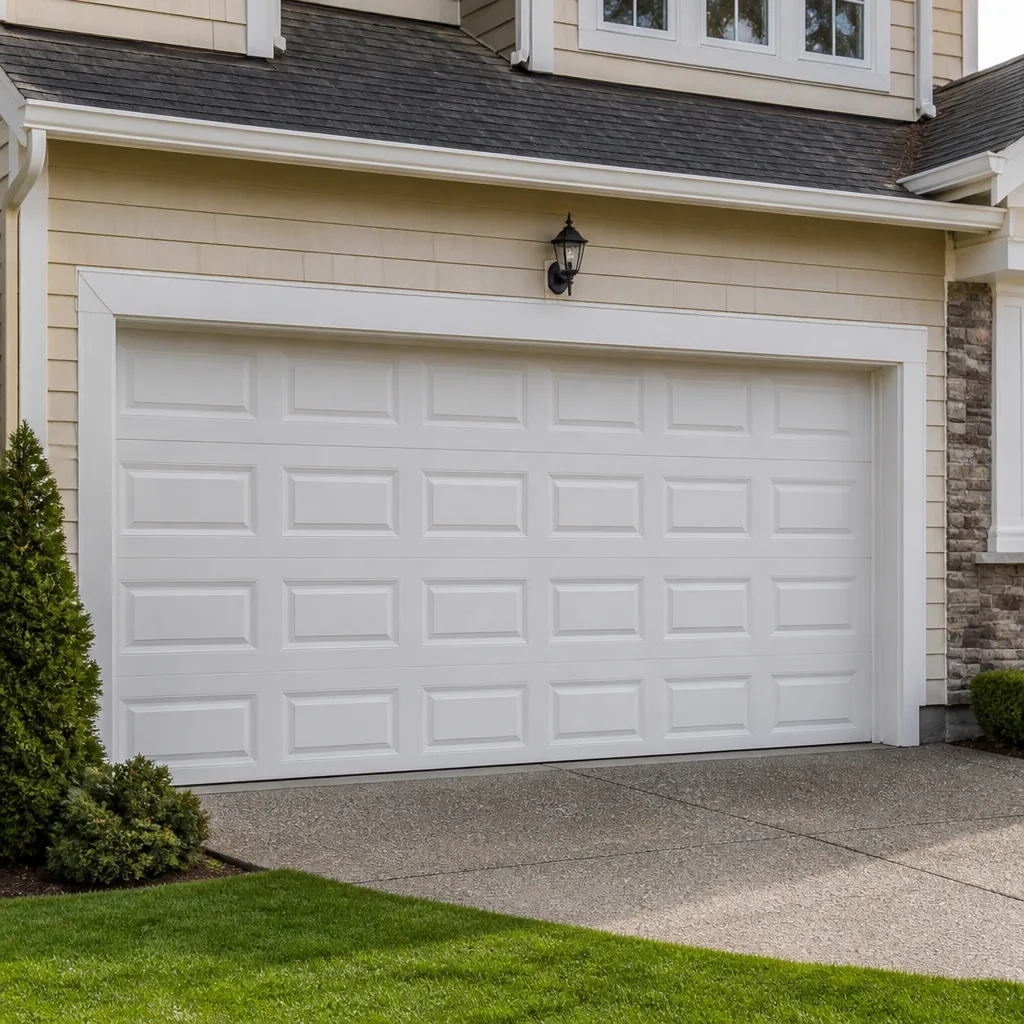 Raised-panel steel
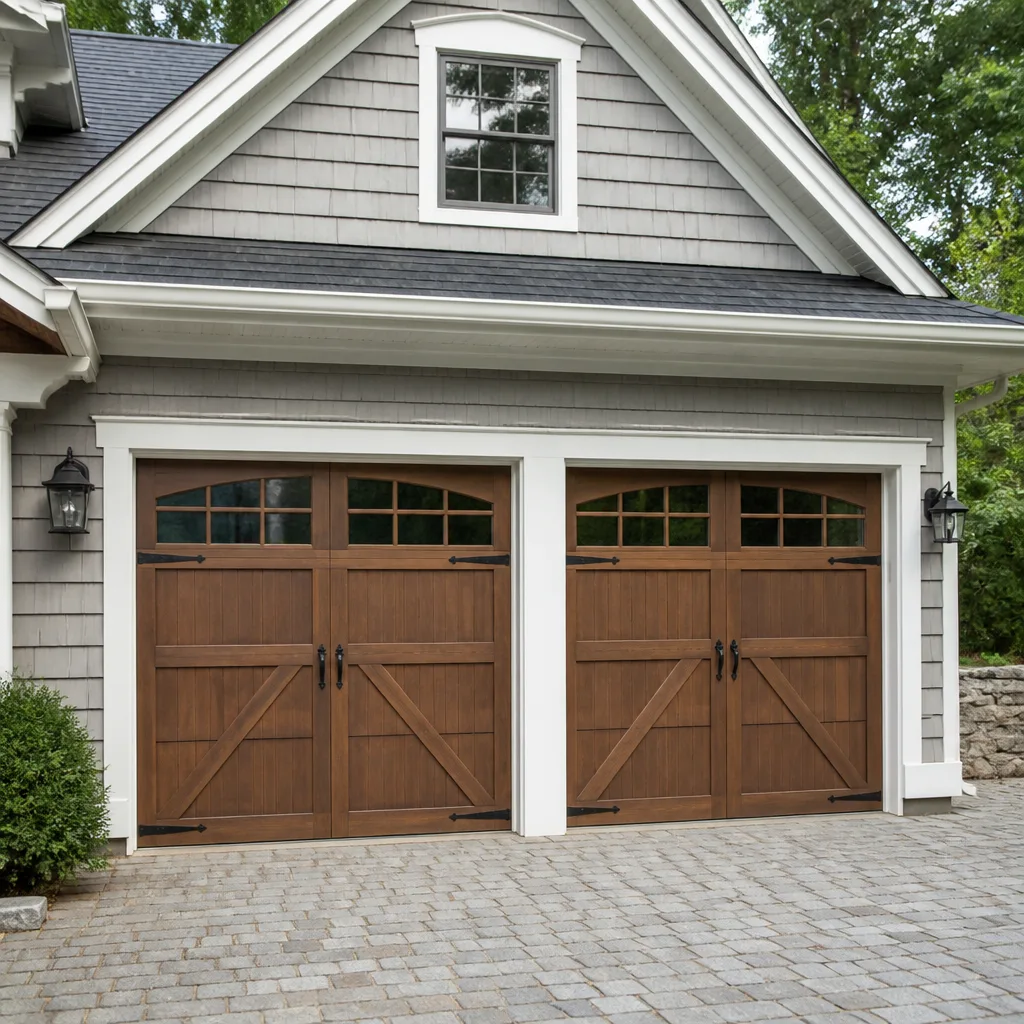 Carriage house
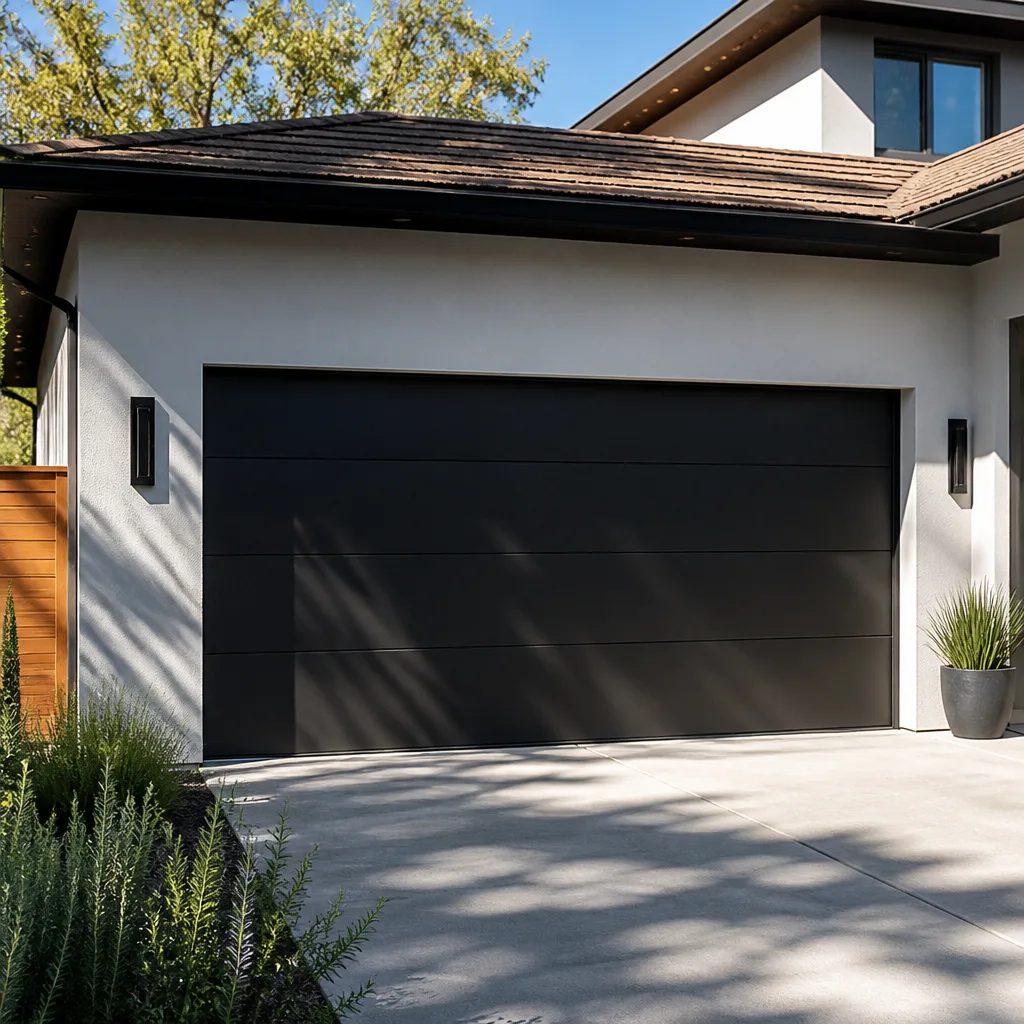 Modern flush
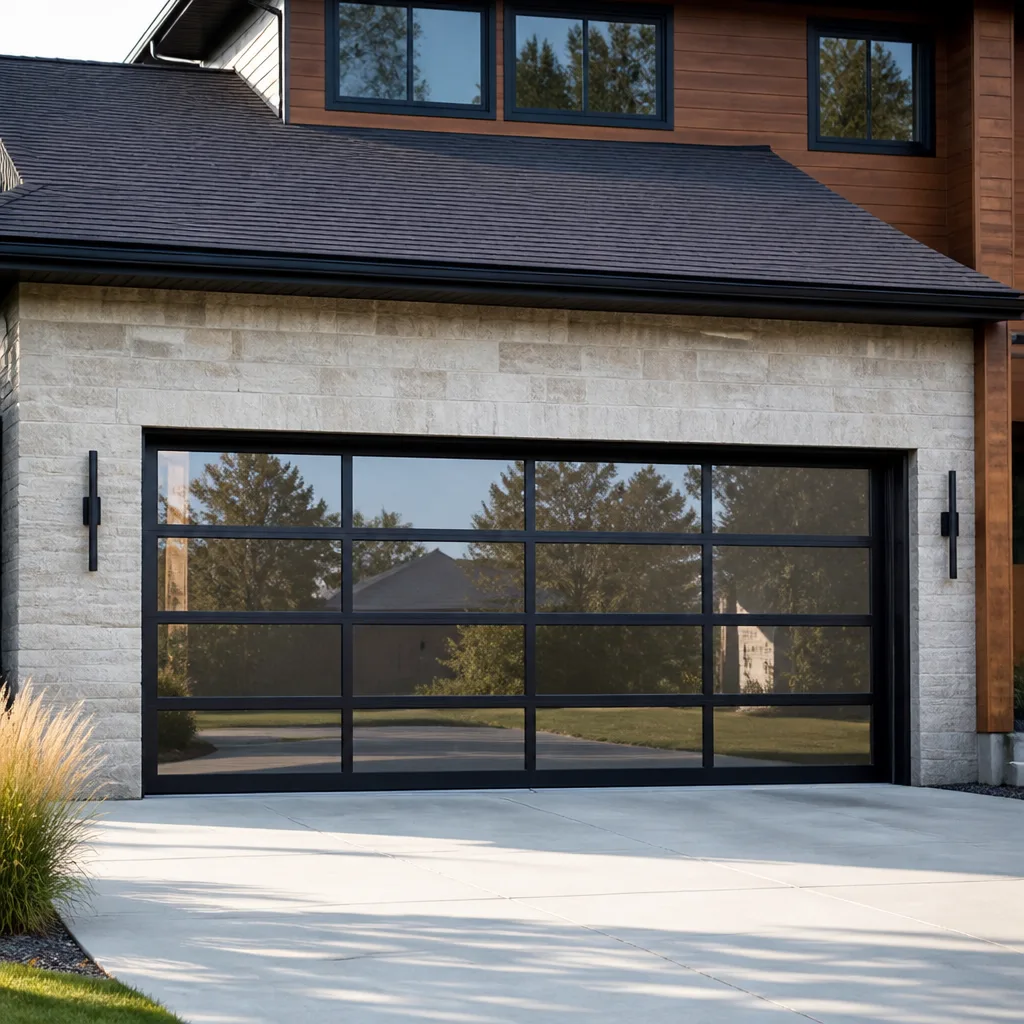 Full-view glass
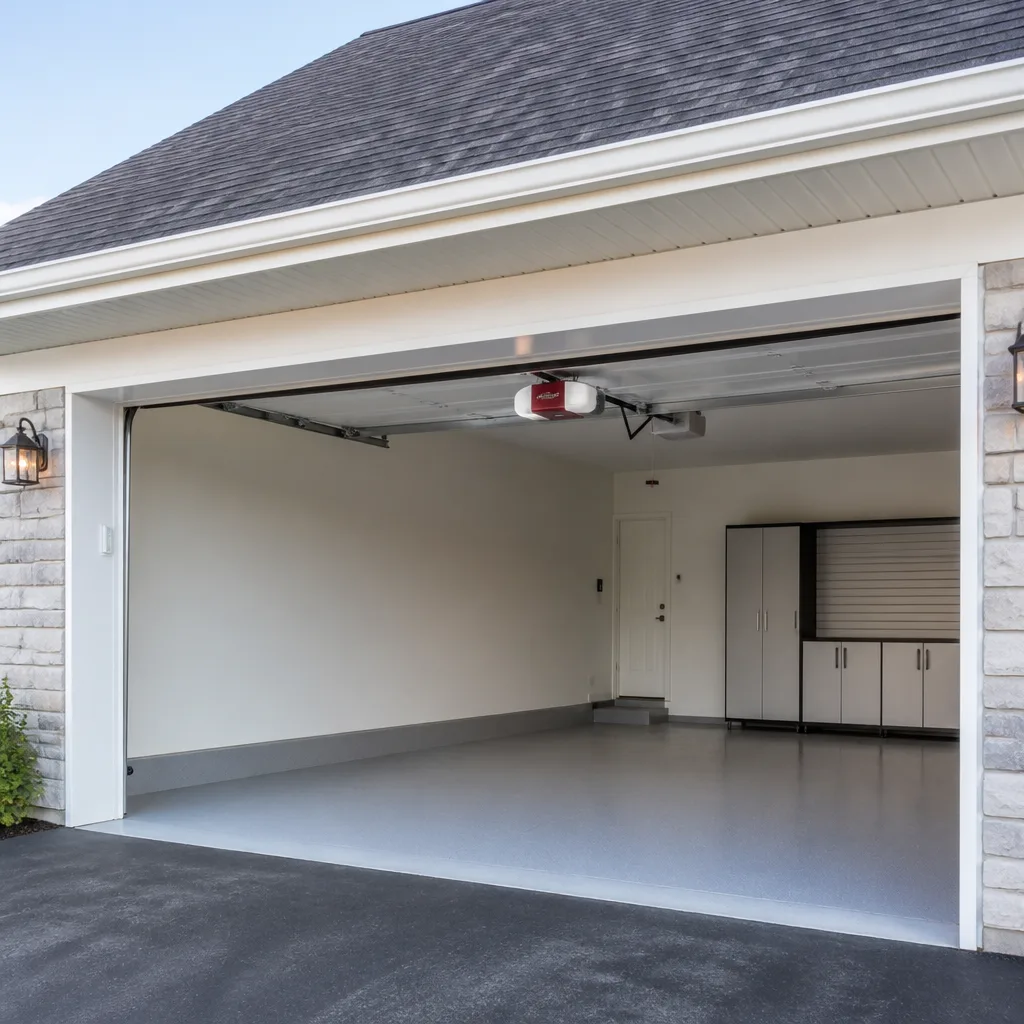 LiftMaster openers
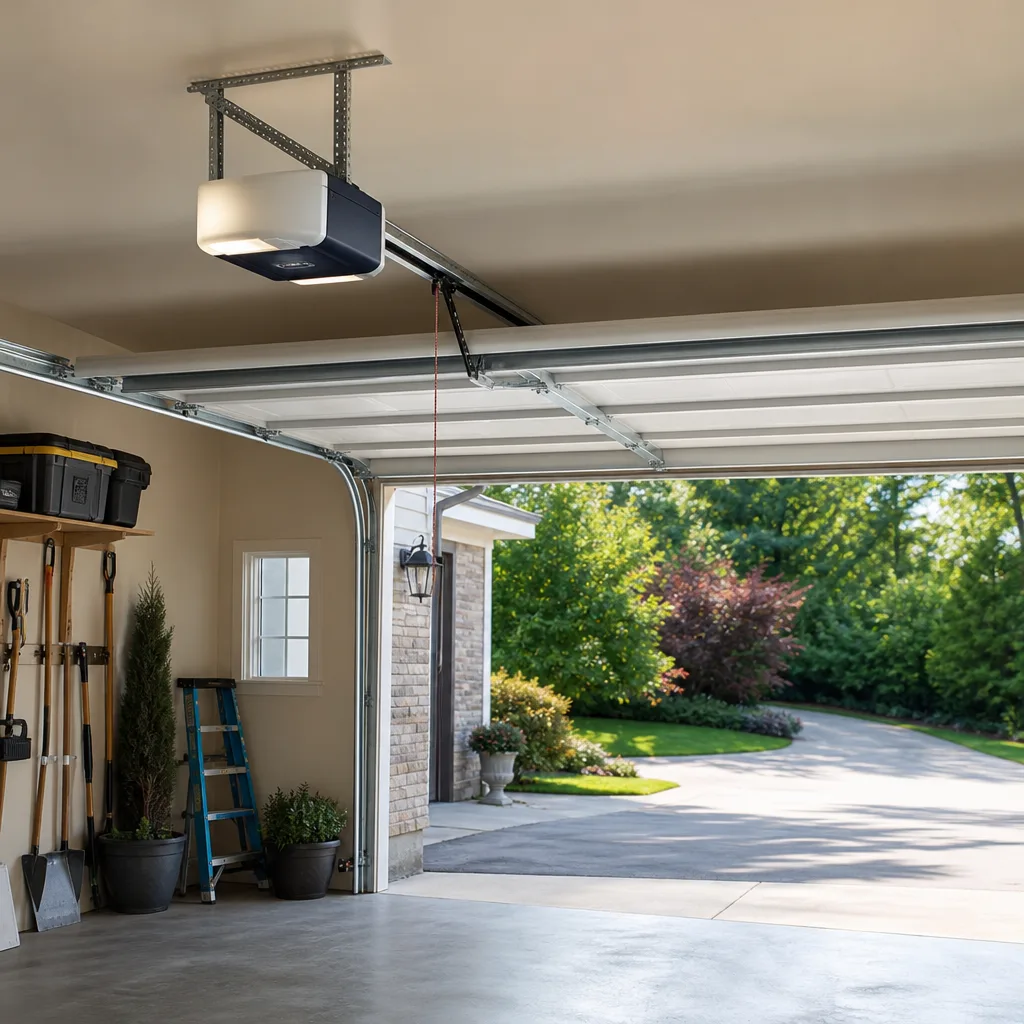 Chamberlain openers
Full 25-point door and opener safety check with every visit - springs, cables, rollers, tracks, and your LiftMaster or Chamberlain opener included
You get a price before we start. It does not change when the truck arrives.
Get your free estimateGarage Door Emergency Preparedness Guide for Orlando Homes
After Hurricane Ian swept through Central Florida, thousands of Orlando homeowners reached for their garage door openers and found a dead wall button, a silent motor, and a two-car garage they couldn’t get into or out of. The trucks were fine. The door was not. What most of them discovered too late was that their opener had a battery backup feature they’d never tested, and three years without a test meant it simply didn’t work when the power failed. This guide covers what actually happens to garage doors during Orlando’s worst weather, how to prepare before storm season starts, what to do when a door fails mid-emergency, and how to get everything running again safely. For more guides & resources, see our blog. You’ll learn the manual release procedure step by step, which battery backup brands hold up, how to brace a stuck-open door when a tornado warning is active, and the post-storm inspection sequence that prevents a small problem from becoming a $1,200 repair.
Styles & brands we work with
Quick Answer
Garage door emergency preparedness in Orlando means three things: knowing how to manually release and operate your door when power fails, having a tested battery backup for your opener, and knowing how to secure a stuck door before severe weather arrives. See our Garage Door Repair Maintenance Checklist for Orlando Homeowners for a full pre-storm routine. The single most important action you can take today is testing your opener’s manual release cord and battery backup, because untested equipment fails exactly when you need it most. For any door that won’t operate safely after a storm, call Carriage Garage Door Repair at (855) 596-4175 for a free estimate.
Table of Contents
- The Orlando Weather Threats Your Garage Door Actually Faces
- How to Manually Release and Operate Your Garage Door When Power Is Out
- Battery Backup Openers: Which Brands Offer Them and How to Test Before Storm Season
- What to Do If Your Door Is Stuck Open During an Active Storm Warning
- How to Secure a Door with a Broken Spring Until a Technician Arrives
- Post-Emergency Inspection Sequence: What to Check Before Resuming Normal Operation
- Common Mistakes to Avoid
- When to Call a Professional
- Frequently Asked Questions
- The Bottom Line
The Orlando Weather Threats Your Garage Door Actually Faces
Orlando homes sit in a unique weather corridor. We get afternoon thunderstorms from June through September that can knock out power in seconds. We get hurricane bands that push sustained winds against garage doors for hours. And we get the occasional tornado warning that gives a family maybe four minutes to secure a two-car opening. A garage door is the largest moving object on your house and the single biggest wind-load surface. When it fails during a storm, the pressure differential can lift your roof. That’s not exaggeration, it’s engineering. Most Orlando homes built after 2002 have wind-rated doors, but a wind rating means nothing if the door is stuck open, the opener is dead, or a spring snapped two weeks before the storm and never got replaced.
In neighborhoods like College Park, Baldwin Park, and Dr. Phillips, we regularly see the same pattern: a homeowner postpones a spring replacement because the door still opens manually, then a summer squall hits and the dead spring becomes an emergency. The time to address garage door issues in Orlando is not during a hurricane watch. It’s in April, before the afternoon storms start, and again in August, before the peak of hurricane season. This guide is built around that timing reality.
How to Manually Release and Operate Your Garage Door When Power Is Out
Every automatic garage door opener has a manual release mechanism, typically a red cord hanging from the trolley that connects the opener to the door. Pulling that cord disengages the door from the opener carriage, allowing you to lift or lower the door by hand. This is the single most important skill a Central Florida homeowner can learn, because power outages here are routine and a garage-stuck vehicle is a real problem when you need to evacuate.
Here’s the step-by-step sequence, with the failure points we see most often:
- Confirm the door is fully closed first. If the door is up or partially open when the power dies, do not yank the release cord. A door released mid-travel can slam down with enough force to injure someone or damage the panels. Lower it manually while it’s still connected, or call a professional if it won’t move.
- Locate the red emergency release cord. It hangs from the center rail. On LiftMaster and Chamberlain openers, it’s typically a red T-handle. On Genie models, it may be a red cord with a plastic grip.
- Pull the cord straight down and toward the garage interior. You should hear a click as the trolley disengages. Do not pull at an angle, and never pull while the opener is running.
- Lift the door by hand using the handle or the bottom edge. A properly balanced door should lift smoothly and stay up on its own around waist height. If it feels heavy, drops when you let go, or binds partway up, the springs are likely worn or broken. Stop and call a technician, because forcing a spring-loaded door is how fingers get pinched and cables snap.
- To close the door manually, lower it slowly. Keep hands clear of the section joints. Engage the slide lock or a padlock through the track if you need to secure the door overnight.
- To re-engage the opener, pull the release cord toward the door. Run the opener once to let the trolley re-engage. You’ll hear it click into place. On newer LiftMaster and Chamberlain models, re-engagement is automatic on the next cycle.
The most common failure point in Orlando is the release cord itself. Humidity corrodes the internal spring clip on older Genie and Craftsman units, and the cord either won’t disengage or won’t re-engage. If you pull the cord and nothing clicks, don’t force it. A stuck trolley is a quick fix for a technician and a broken one is a three-hour job. For doors that won’t budge even after releasing, the problem is usually a snapped cable or a bound roller. Our Garage Door Repair in Orlando team handles these manual-release failures regularly after summer storms.
Battery Backup Openers: Which Brands Offer Them and How to Test Before Storm Season
Since 2019, California building code has required battery backup on all newly installed residential garage door openers, and while Florida hasn’t adopted that mandate, the market has shifted anyway. LiftMaster and Chamberlain now include battery backup as standard on most belt-drive and wall-mount models sold in Orlando. Genie offers it on their higher-end models and as an add-on for some mid-range units. The battery’s job is simple: run the opener for a limited number of cycles when household power is out.
What to expect from a healthy battery backup:
- LiftMaster and Chamberlain: 20 to 40 open-close cycles on a full charge, depending on door size and balance. The battery is typically a 12V sealed lead-acid unit inside the opener housing.
- Genie: 30 to 50 cycles on their newer models with the integrated backup. Their wall-mount and belt-drive options both offer this.
- Runtime reality: A two-car Orlando household that opens and closes the garage four times a day will drain a backup battery in 5 to 10 days during a prolonged outage like after Hurricane Ian. That’s the pattern we saw all over MetroWest and Hunters Creek: the battery worked for the first two days, then died because nobody conserved cycles.
Testing protocol before storm season is simple and takes five minutes. Unplug the opener from the ceiling outlet, leaving the battery connected. Press the wall button or remote. If the opener runs, the battery is functional. If it clicks without moving, beeps without running, or does nothing, the battery needs replacement. Do this test in May, before the afternoon storm pattern starts, and again in August. Battery lifespan in Orlando’s heat is 2 to 4 years, shorter than the national average because garage temperatures routinely exceed 100 degrees in summer. That heat degrades battery chemistry faster than anything else.
One thing worth knowing: a battery backup only powers the opener motor. It does not charge your car, run your lights, or power the door’s safety sensors indefinitely. If your door has a battery backup and still won’t operate during an outage, the problem may be the opener logic board or the door balance. Our Garage Door Opener Repair in Orlando service diagnoses battery, logic board, and motor issues on all major brands.
What to Do If Your Door Is Stuck Open During an Active Storm Warning
A garage door stuck open during a tornado warning or hurricane band is a genuine emergency. Wind entering a two-car garage opening can create upward pressure on the roof deck, and that’s how homes lose trusses and sheathing. The goal is to reduce the opening or brace what’s there, and you have minutes, not hours. Here’s what actually works, based on what we’ve seen hold up in Orlando storms:
- Disconnect the opener first. Pull the release cord so the door is free to move manually. A live opener during bracing attempts risks someone getting hit by a moving trolley.
- Lower the door as far as it will go manually. If the spring is intact, the door should lower fully. Lock it in place with the slide lock or a pair of vice grips clamped on the track just above a roller. This prevents wind from lifting the door back up.
- If the door won’t lower, brace the opening diagonally. Run a 2×4 from the bottom corner of the opening to the top corner and screw or nail it into the door frame and the door itself if possible. Do this for both sides. The diagonal brace converts the opening into two triangles, which dramatically increases rigidity.
- Park a vehicle against the door if you can. Even a partially braced door benefits from having a car bumper pressed against the inside. It won’t stop a tornado, but it reduces the door’s flex under wind load.
- Move anything loose out of the garage. Ladders, bikes, and tool carts become projectiles at 70 mph. Ten minutes spent moving them inside can save your drywall and your car.
These braces are temporary. After the storm passes, remove them before attempting to operate the door, and inspect the tracks and panels for warping. A braced door that took a sustained wind hit may have bent tracks or popped rollers, and running the opener on a damaged door causes more damage. If the door won’t run smoothly after you remove the braces, leave the opener disconnected and call us.
How to Secure a Door with a Broken Spring Until a Technician Arrives
A broken torsion spring makes a garage door feel like it weighs 400 pounds, because that’s roughly the weight you’re now lifting without counterbalance. The spring snaps with a bang that sounds like a car backfiring in the garage. When that happens in Orlando, the repair can often be same-day, but if it happens at 9 pm on a Saturday or during a storm, you need to secure the door until we can get there.
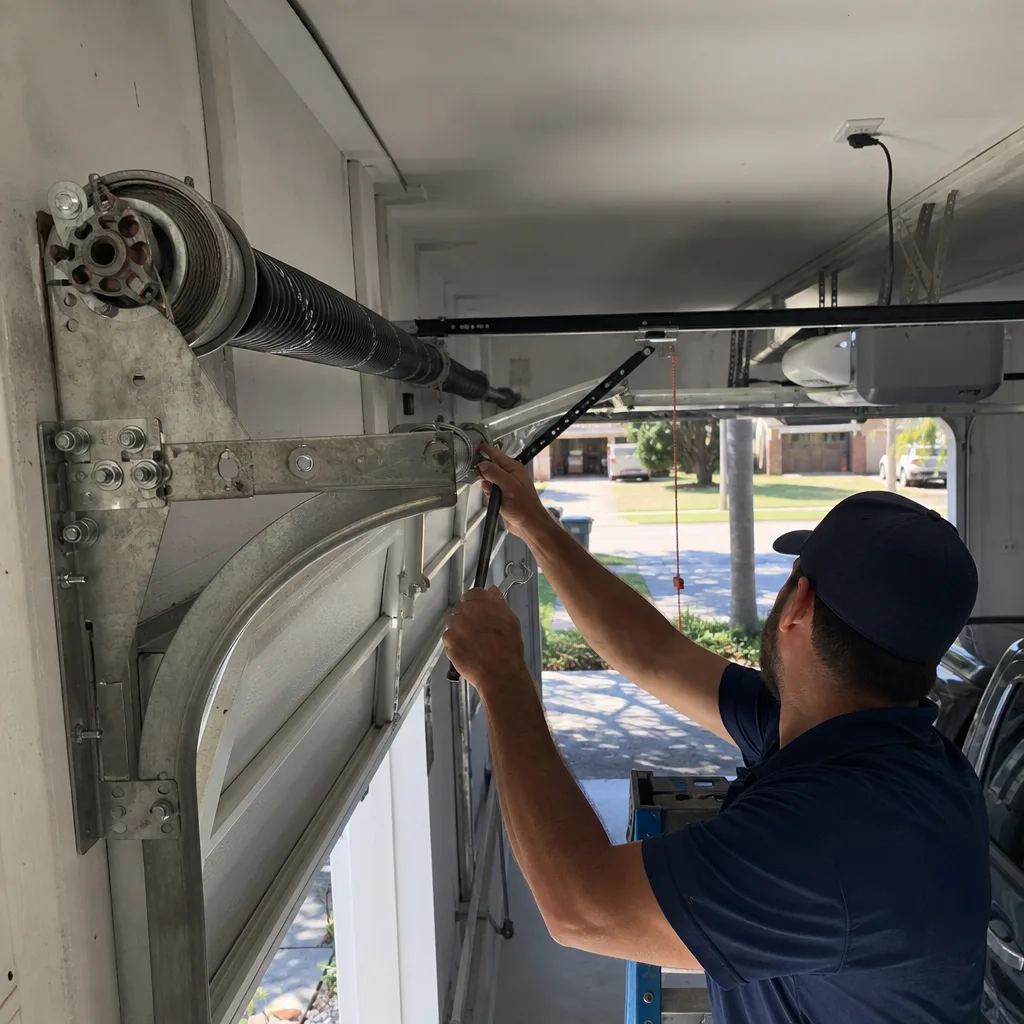
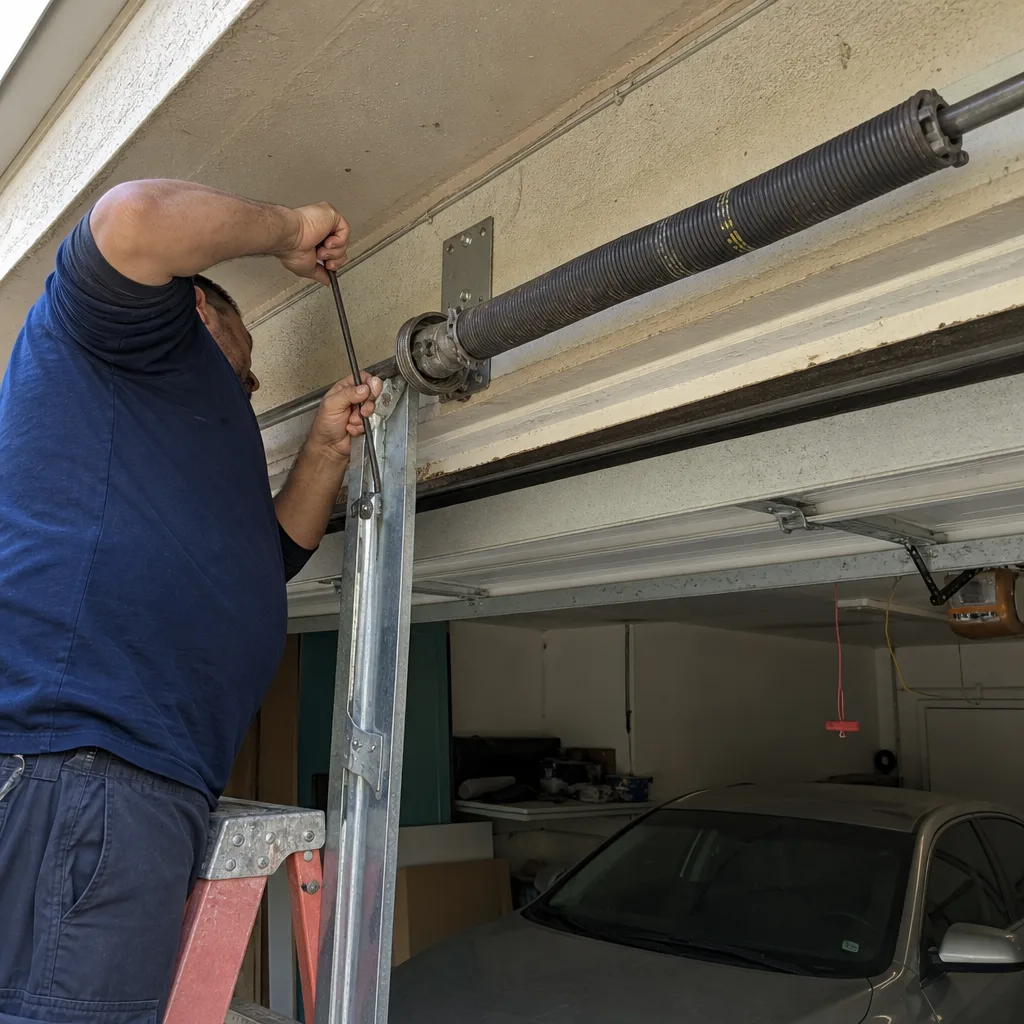
First, the safety caveat: torsion springs are under extreme tension. Do not attempt to wind, unwind, or replace a spring yourself. The tools and technique required are specialized, and a spring under load can break bone or worse. What you can do safely is secure the door in its current position.
- If the door is closed: Leave it closed. Disconnect the opener by pulling the release cord, then secure the door with the slide lock or a padlock through the track. A door with a broken spring will not stay closed under power, and some openers will strain against the extra weight and burn out the motor.
- If the door is open: Lower it manually if you can. With a broken spring, this takes real effort. Two people can usually manage it by lifting slightly while the other pulls down. Once lowered, secure it with vice grips on the track just above a roller on both sides. Do not rely on the opener to hold it, because the opener is not designed to bear that load.
- If the door has two springs and one broke: The remaining spring still carries roughly half the load, but it’s now working twice as hard. The door will feel uneven and may bind. The broken spring should be replaced before running the opener at all.
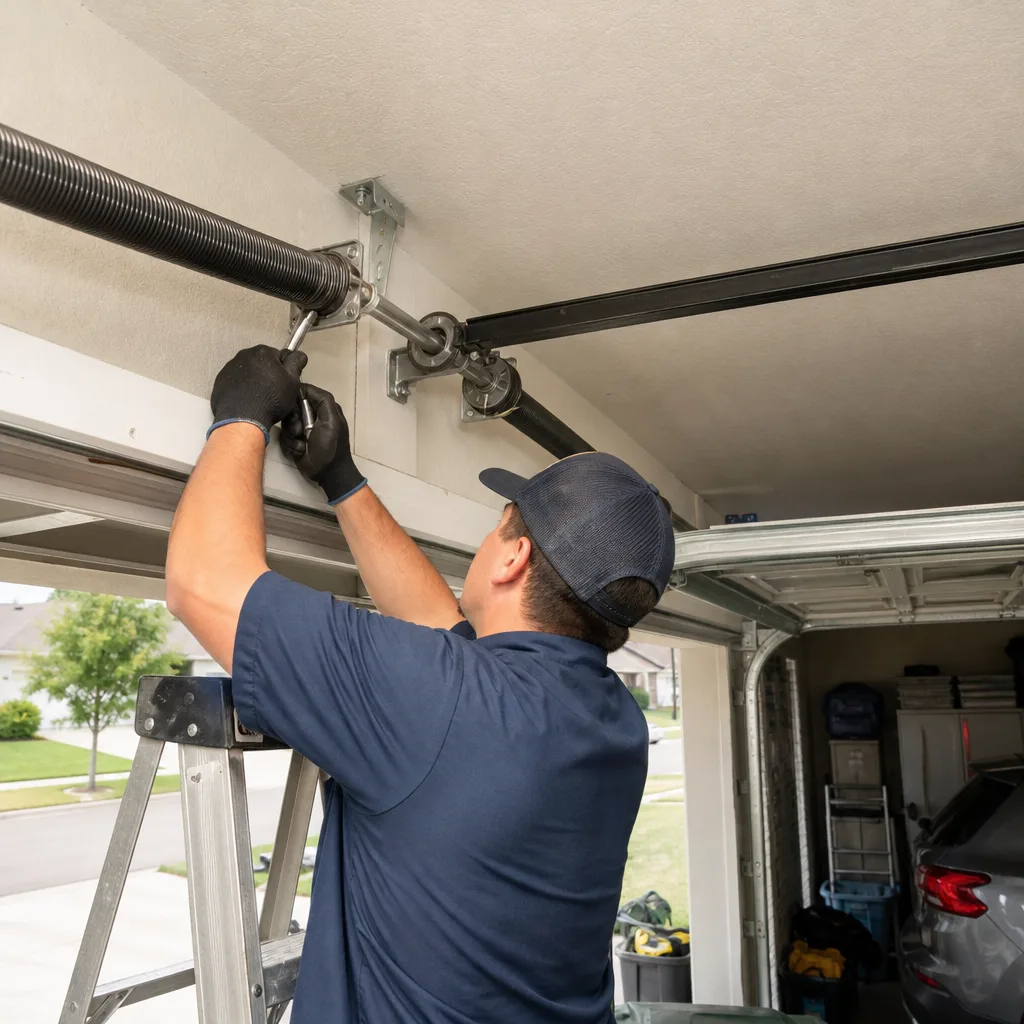
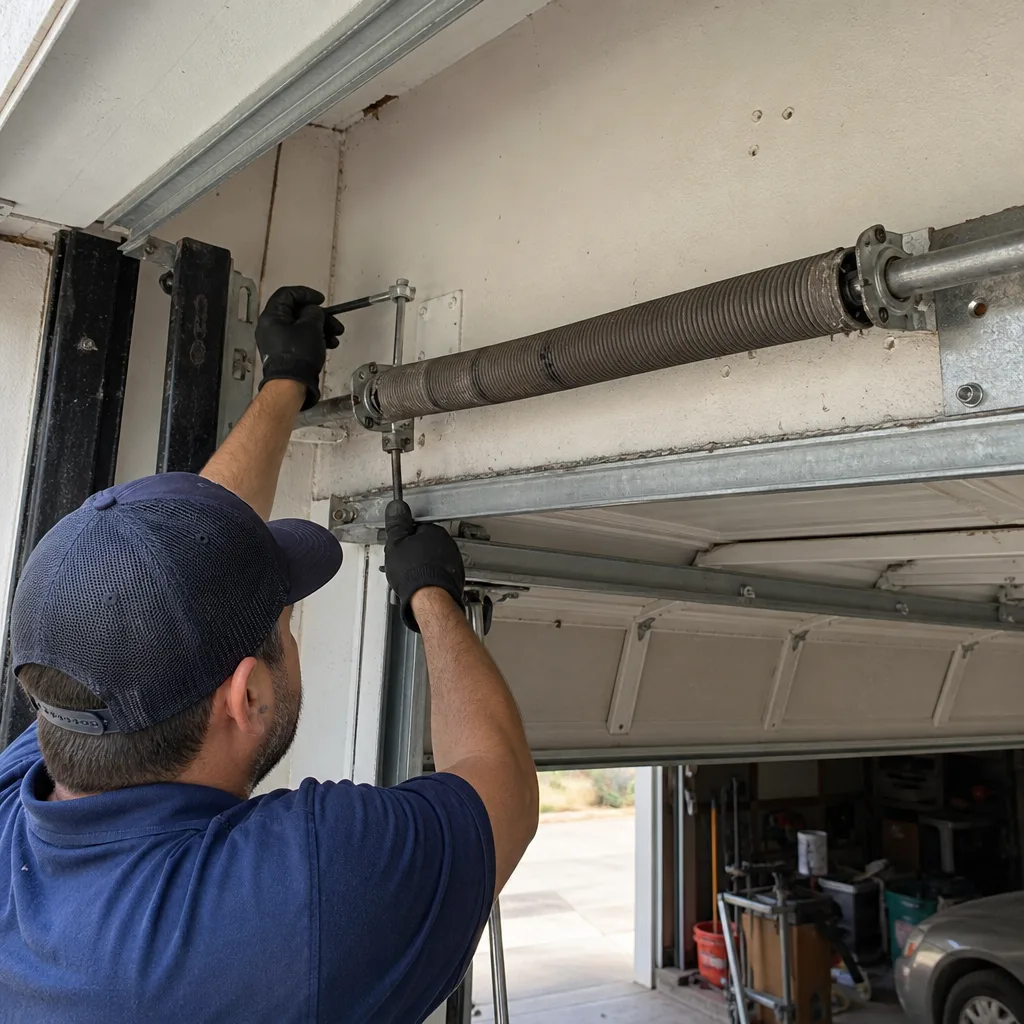
We replace both springs as a pair, even if only one broke. Springs are rated for a certain number of cycles, usually 10,000, and if one has failed, its partner is close behind. Matching a new spring to an old one creates an unbalanced door, and an unbalanced door wears out openers, rollers, and cables quickly. For Orlando homeowners, where doors cycle four to six times a day, a 10,000-cycle spring lasts about five to seven years. If your springs are older than that, a failure isn’t a surprise, it’s a schedule item.
Post-Emergency Inspection Sequence: What to Check Before Resuming Normal Operation
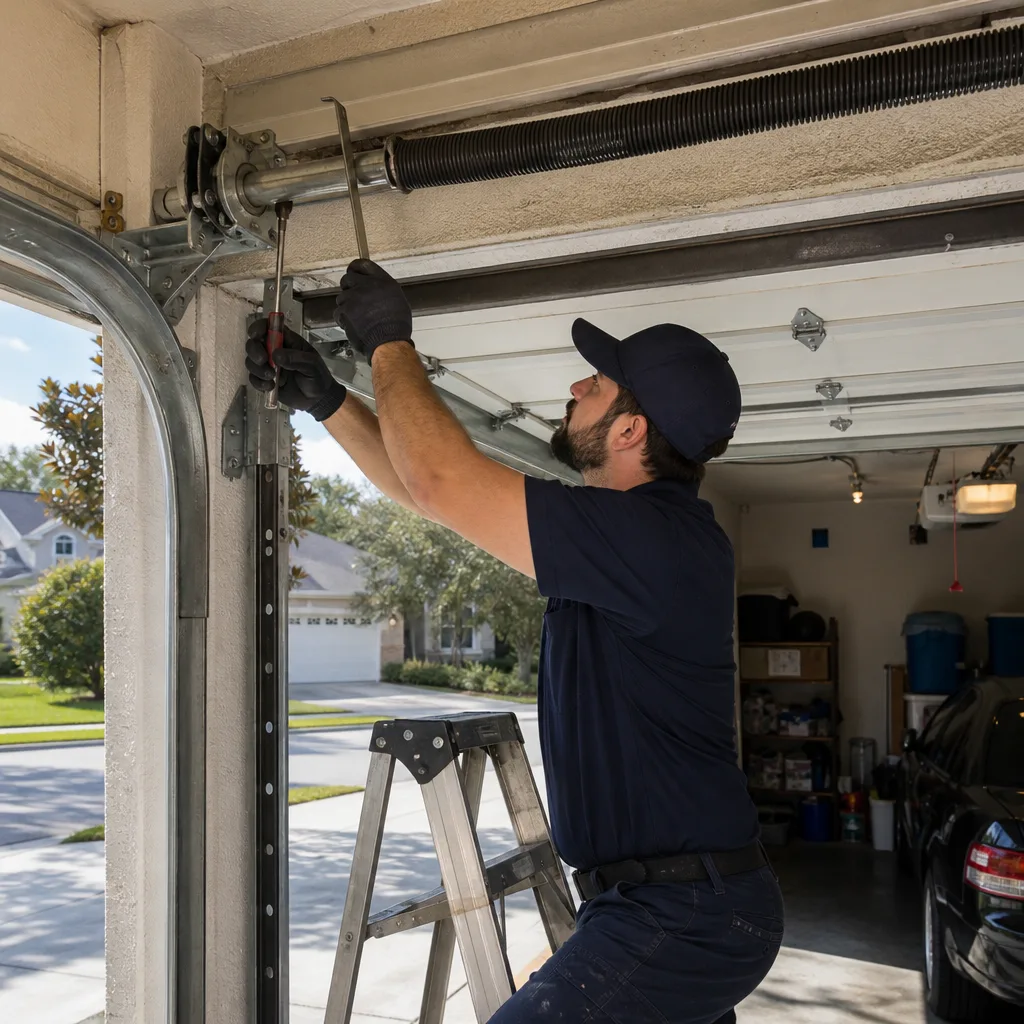
After any Orlando storm that brought high winds, flying debris, or a power outage, run this inspection before you press the wall button. We’ve developed this sequence from hundreds of post-storm service calls across the city, and it catches the problems that become bigger problems if left.
- Walk the door visually. Look for dents, panel separation, and daylight between sections. Storm debris can dent a panel without breaking it, but a dented panel can throw off track alignment. Check the bottom seal too, because water intrusion rots the bottom panel over time.
- Inspect the track and rollers. Look for bent track sections, loose mounting brackets, and rollers that are chipped or out of their track. A common post-storm finding is the track pulled away from the wall by wind load. That misalignment causes the door to bind when the opener runs.
- Check the cables. Look for frayed strands, kinks, or a cable that has jumped its pulley. A cable off the pulley is often the result of the door being forced during high winds, and it’s a sign the spring system got jolted.
- Test the manual balance. Pull the release cord and lift the door halfway. It should stay there on its own. If it drops, the springs need attention. A door that drops has a broken or fatigued spring, and running it under power will wreck the opener in short order.
- Plug the opener back in and test one cycle. Watch and listen. Grinding noises, slow travel, or reverse-before-close behavior all indicate problems. If the opener trips the safety reverse during a clean close cycle, check the sensor alignment, since sensors get knocked out of position by storm vibration.
- Verify the battery backup still charges. After a real outage, the backup battery may be depleted to the point that it won’t recharge. A battery that sat dead for a week is often unrecoverable. Test it after 24 hours of charging.
If anything in this sequence fails, disconnect the opener and leave the door manual until a technician looks at it. Continuing to run a compromised door is how a $150 roller replacement becomes an $800 track and panel job. When you need a full system check after a storm, our Garage Door Installation in Orlando team also performs structural assessments on existing doors, because sometimes the right answer is replacement rather than repair.
Common Mistakes to Avoid
- Testing the battery backup by unplugging the opener and running it ten times. Each test cycle drains the battery, and a backup battery that’s 60 percent depleted by June won’t last through a September outage. Test once, confirm function, plug it back in.
- Pulling the release cord while the door is open. In Orlando’s summer storm pattern, this is the most common injury scenario we hear about. An open door released under tension can drop like a guillotine. Always lower the door first.
- Using the opener to lift a door with a broken spring. The opener motor is not designed to lift 400 pounds of dead weight. Running it against a broken spring burns out the motor and strips the gear, turning a $300 spring job into a $700 spring and opener job.
- Ignoring a door that’s slightly off balance. A door that’s heavy on one side or doesn’t stay put at half height is telling you something. In Orlando, where doors run constantly, a small imbalance becomes a broken spring or stripped opener within weeks.
- Assembling an emergency plan around a door that hasn’t been serviced in five years. Emergency preparedness assumes the equipment works. A ten-year-old opener with original springs and no maintenance history is not prepared, it’s waiting to fail.
- Re-engaging the opener after a storm without checking the track and rollers. Post-storm damage is often subtle, and running the opener before inspecting the door turns a bent track into a shredded cable and a dropped door.
When to Call a Professional
Call a professional when the spring is broken, when the door comes off its track, when the cable snaps, when the opener motor runs but the door doesn’t move, or when any post-storm inspection step fails. Also check local requirements in our Garage Door Permits, Codes & Inspections in FL: What You Need to Know if you’re replacing a door or opener. These are not DIY situations, and in each case, continuing to operate the door makes the repair more expensive. If your door is stuck open and a storm is approaching, call before you improvise a fix, because a phone diagnosis takes two minutes and might save you from a dangerous bracing job. For Orlando homeowners, Carriage Garage Door Repair offers free estimates and works on all the major brands: LiftMaster, Chamberlain, Genie, and Clopay systems are the ones we see most often in this market. Call (855) 596-4175 and we’ll tell you whether repair or replacement makes more sense.
Frequently Asked Questions
Emergency garage door repair in Orlando typically runs $180 to $400 for a spring replacement, $150 to $300 for a cable or roller fix, and $200 to $450 for opener motor or logic board repairs, depending on the brand and the damage. The price is quoted and agreed before any work starts, so there are no surprises on the invoice. Call (855) 596-4175 for a free estimate on your specific door.
Yes, we maintain same-day response for spring failures, doors off track, and opener failures throughout the Orlando metro area, including College Park, Baldwin Park, Dr. Phillips, and Winter Park. Call (855) 596-4175 as soon as you notice the problem, and we’ll get a technician to you.
No. The price we quote over the phone and on arrival is the price you pay. We discuss the full scope of work before anything starts, and we don’t add charges after the fact. If the inspection reveals something we didn’t see, we stop and discuss it with you before proceeding.
We stock common parts for LiftMaster, Chamberlain, Genie, Clopay, Amarr, Wayne Dalton, Craftsman, and Raynor systems, which means the technician who arrives at your Orlando home can usually complete the repair in one visit. Brand-specific knowledge and stocked trucks go together, because a generalist can’t carry everything for every door.
First, pull the manual release cord and try to lift the door by hand. If it’s heavy or won’t move, the springs or cables are the problem. If it lifts fine manually, the issue is the opener: check the breaker, test the battery backup by unplugging and running, and if neither works, call for opener diagnosis at (855) 596-4175.
Standard torsion springs in Orlando last 5 to 7 years, or about 10,000 cycles, because the heat and humidity in garages accelerate metal fatigue and because Orlando homeowners cycle their doors more often than average. If your springs are older than that, replacement is a preparedness step, not a repair.
The Bottom Line
Garage door emergency preparedness in Orlando comes down to three habits: know how to manually release your door, test your battery backup every May and August, and fix small problems before hurricane season turns them into emergencies. A working door with fresh springs, a charged backup battery, and a homeowner who knows the release procedure is ready for everything from an afternoon thunderstorm to a four-day post-hurricane outage. A door that hasn’t been touched in five years is a liability. If you haven’t tested your door this season, do it this weekend. And if something fails, call (855) 596-4175 for a free estimate from a team that works on your brand. For more on our services, visit our Carriage Garage Door Repair home page.
Written by the team at Carriage Garage Door Repair, serving Orlando since 2016.
See the difference
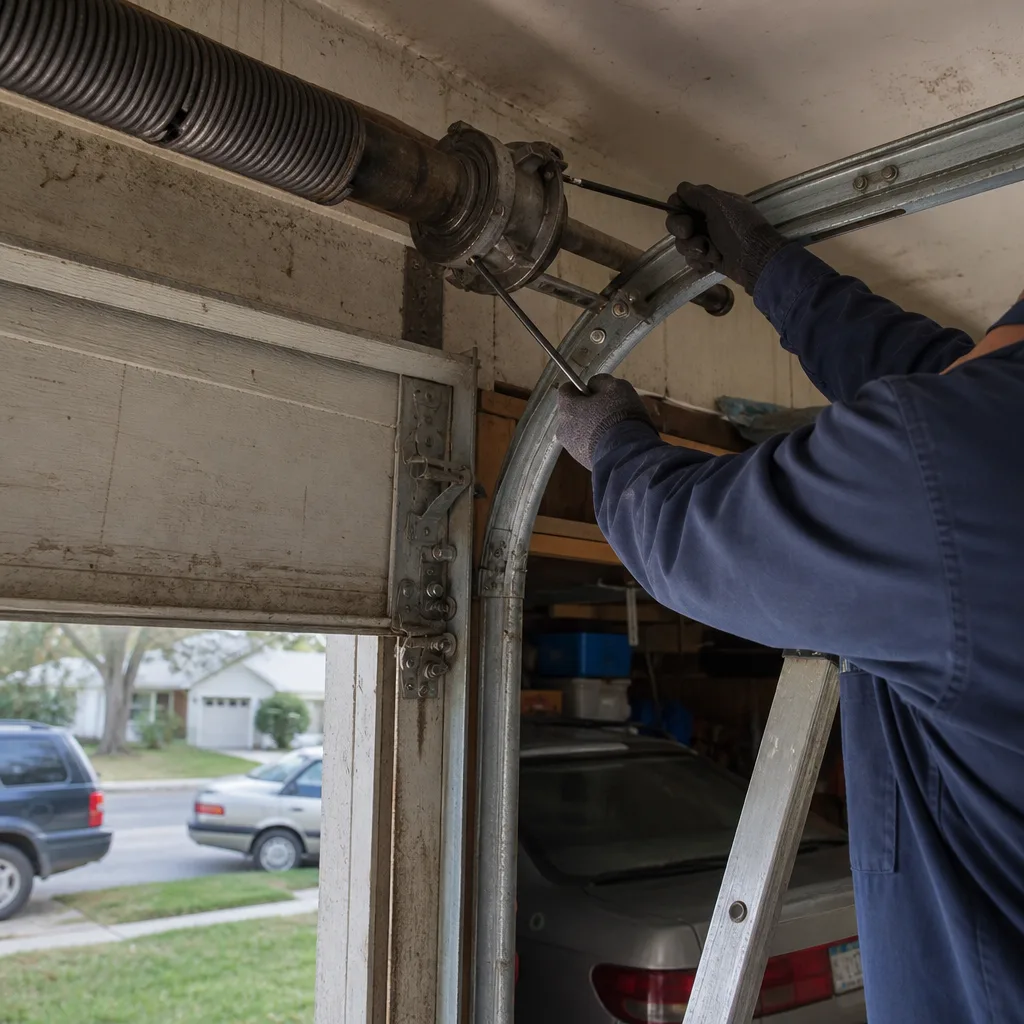 Before
 After
 Before
 After
 Before
 After